
Acetaminophen: common pain relief with a narrow margin for overdose
CAS 103-90-2.Also known as paracetamol, APAP, and N-acetyl-p-aminophenol.
Editorial draft Last reviewed 10 November 2026 About 954 words
CC INDEX
How it works62/100 High
Overdose can cause severe or fatal liver injury, and that harm is well established. Exposure is deliberate and dose-limited, so normal use as labelled carries far lower risk. The pregnancy and neurodevelopment question is disputed between regulators.
An editorial summary of this article’s cited evidence. It isn’t medical advice or a personal risk estimate.
Age index
What is the age index?Which age groups are more affected by this chemical’s possible health issues, based on this article’s sources.
- Pregnancy Unborn babies Moderate
- Infants 0 to 1 Moderate
- Young children 1 to 5 Moderate
- Children 6 to 12 Moderate
- Teens 13 to 19 Moderate
- Adults 20 to 64 Moderate
- Older adults 65 and over Not well studied
- Pregnancy (moderate): Pregnancy question is disputed; untreated fever also has risks
- Infants (moderate): Doses go by weight; keep out of reach
- Young children (moderate): Doses go by weight; keep out of reach
- Adults (moderate): Doubling up on products; alcohol or liver disease

Illustration of plain pain-relief tablets. Many cold, flu and combination products also contain acetaminophen, so check every label.
Credit: Chemical Century; AI-generated illustration
License: CC0 1.0
Illustration, not a photograph of a specific product. Resized and cropped for the web.
For many families, acetaminophen is the first thing reached for when a child spikes a fever or a headache won't quit, and used as directed it is a dependable part of the medicine cabinet. The trouble usually starts quietly: a cold-and-flu syrup at night, a pain tablet in the morning, and nobody notices that both contain the same ingredient. Too much can injure the liver, and early on a person may feel only mildly unwell or perfectly fine, which is why a suspected overdose needs urgent care even before symptoms appear. Knowing what is in each box, and keeping track over a sick day, is most of what keeps this familiar medicine safe.
Everyday exposure: where you meet it and how much
Acetaminophen, called paracetamol in most of the world, is used for pain and fever. It is sold on its own and in many cold, flu, sleep and prescription combination products. That matters, because the main avoidable risk comes from taking two products that both contain it. [1,2]
Health Canada says adults should not take more than 4,000 mg in 24 hours from all sources unless a health professional advises otherwise. People with liver disease, or who drink three or more alcoholic drinks a day, may need a lower limit. Follow the label of the actual product, and the dose for children by weight or age. [1,2]
Known and suspected harms
Evidence labels are editorial summaries, not individual risk predictions: established means recognized under the stated conditions; probable means a likely contribution with uncertainty; possible means limited evidence; disputed means assessors disagree. These labels do not describe how common an effect is.
- Established — liver injury from taking too much: MedlinePlus warns that too much acetaminophen can damage the liver, sometimes badly enough to need a transplant or cause death. Health Canada says acetaminophen is a leading cause of acute liver failure, and that overdoses lead to about 4,500 hospital stays a year in Canada, about 16% of them accidental. Early symptoms can be mild or absent, so suspected overdose needs urgent care even if the person feels well. [1,2]
- Established — rare serious skin and allergic reactions: MedlinePlus lists red, peeling or blistering skin, rash, hives, swelling and trouble breathing as reasons to stop and get medical help. [1]
- Disputed — use in pregnancy causes autism or ADHD: in September 2025 FDA described an association reported in some studies and started a label change, while saying a causal link had not been established. EMA says the evidence does not show that paracetamol causes autism, and that its advice on use in pregnancy is unchanged. ACOG continues to regard it as an appropriate option in pregnancy when needed. Anyone pregnant should discuss pain or fever treatment with a clinician, because untreated fever also carries risks. [4–6]
Reducing avoidable exposure and harm
Check the active ingredients of every medicine you take at the same time, including night-time and cold remedies. Use a dosing device made for the product, keep track of doses, and do not exceed the daily limit on the label. Ask a pharmacist before use if you have liver disease or drink alcohol regularly. Store medicines where children cannot reach them. If too much has been taken, call a poison centre or emergency services right away. [1,2]
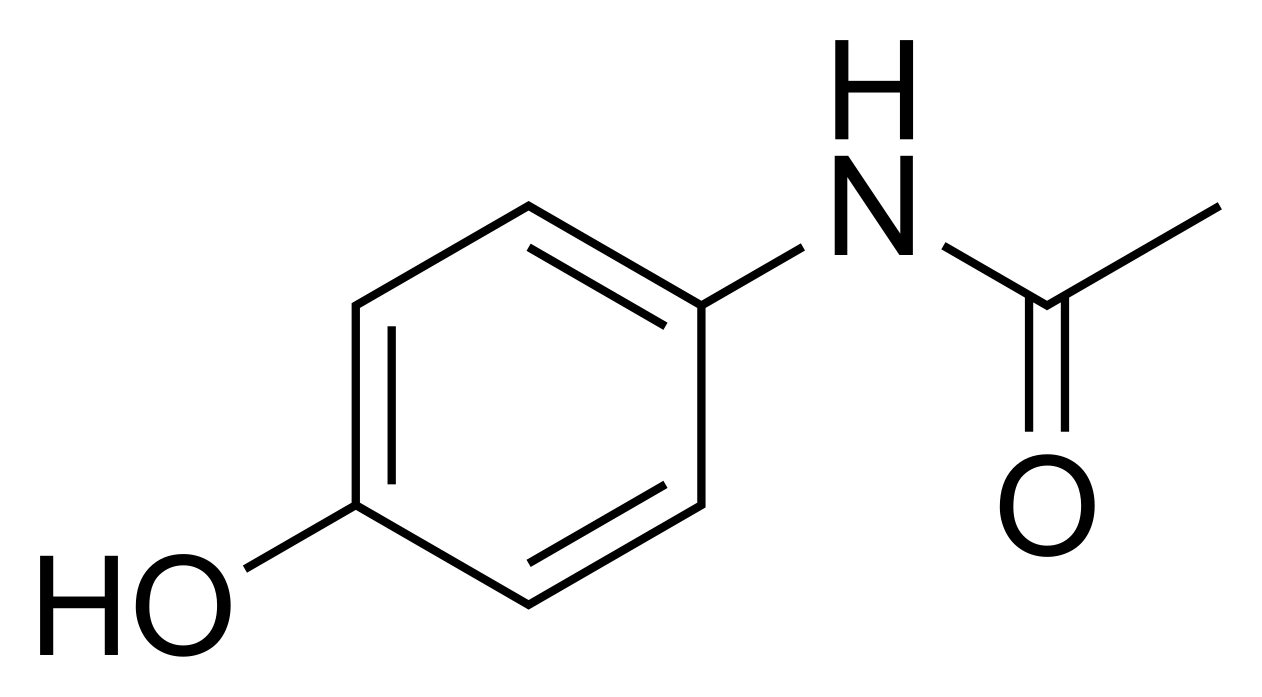
Acetaminophen (paracetamol) structural formula.
Credit: Benjah-bmm27 / Wikimedia Commons

License: Public domain
Wikimedia-provided PNG rendering of the SVG; whitespace trimmed, no content edits
What it is
Acetaminophen is a pain reliever and fever reducer. Its CAS number is 103-90-2. It is a different kind of medicine from nonsteroidal anti-inflammatory drugs, so the cautions for those medicines do not transfer directly, and vice versa. [1,7]
What it does and why it is used
It relieves mild to moderate pain, such as headache, muscle ache, toothache and period pain, and lowers fever. It is used by adults and children, in tablets, capsules, liquids, suppositories and combination products. [1]
Regulatory status and health context
Canada
In Canada acetaminophen is available without a prescription. Health Canada's consumer page sets out the 4,000 mg daily limit for adults and the liver-injury risks above. It has also announced a limit of 325 mg of acetaminophen per unit in prescription combination products. [2,3]
United States
In the United States acetaminophen is sold over the counter and in prescription combinations. FDA's September 2025 announcement on pregnancy said it was starting a label change to reflect a possible association, while stating that a causal relationship had not been established and that some studies did not find one. [1,4]
European Union
EMA reviewed the same question and concluded that available evidence does not show that paracetamol use in pregnancy causes autism. Its advice is that paracetamol can be used in pregnancy when needed, at the lowest effective dose for the shortest time. [5]
Environmental notes
MedlinePlus advises using a medicine take-back program and not flushing acetaminophen. Ask a pharmacist about local return options. The sources used here do not give enough environmental data to rate its aquatic risk. [1]
Quick facts
- CAS: 103-90-2. [7]
- Other names: paracetamol, APAP. [7]
- Purpose: pain relief and fever reduction. [1]
- Adult maximum in Canada: 4,000 mg in 24 hours from all sources, unless advised otherwise. [2]
- Main avoidable risk: accidental double-dosing across products. [1,2]
Sources
All URLs were fetched on 2026-11-10. Source publication dates differ from this draft's review date.
- MedlinePlus: Acetaminophen.
- Health Canada: Acetaminophen.
- Health Canada: Notice on limiting the strength of acetaminophen to 325 mg per dosage unit in prescription combination products.
- FDA: FDA Responds to Evidence of Possible Association Between Autism and Acetaminophen Use During Pregnancy.
- EMA: Use of paracetamol during pregnancy unchanged in the EU.
- ACOG: Acetaminophen use in pregnancy and neurodevelopmental outcomes.
- PubChem PUG REST: acetaminophen synonyms.