
Food and drinkNutrients and supplements
Caffeine: a familiar stimulant that is safe in moderate amounts and dangerous in concentrated form
CAS 58-08-2.Also known as 1,3,7-trimethylxanthine, trimethylxanthine, guaranine, and theine.
Editorial draft Last reviewed 10 November 2026 About 1068 words
CC INDEX
How it works38/100 Mild
Most adults who stay near 400 mg a day have no harm reported by these agencies, and effects at higher intakes usually pass. The score is lifted by near-universal exposure and by well-documented deaths from pure and highly concentrated caffeine powders and liquids, which are measured very differently from a cup of coffee.
An editorial summary of this article’s cited evidence. It isn’t medical advice or a personal risk estimate.
Age index
What is the age index?Which age groups are more affected by this chemical’s possible health issues, based on this article’s sources.
- Pregnancy Unborn babies Higher concern
- Infants 0 to 1 Not well studied
- Young children 1 to 5 Higher concern
- Children 6 to 12 Higher concern
- Teens 13 to 19 Higher concern
- Adults 20 to 64 Lower concern
- Older adults 65 and over Not well studied
- Pregnancy (higher concern): Lower suggested daily limits in pregnancy
- Young children (higher concern): Lower limits per kg of body weight
- Children (higher concern): Lower limits; energy drinks not advised
- Teens (higher concern): Lower EFSA limit; energy drinks not advised
- Adults (lower concern): Healthy adults tolerate moderate amounts

Illustration of everyday caffeine sources. A brewed cup of coffee usually contains far more caffeine than a cup of tea.
Credit: Chemical Century; AI-generated illustration
License: CC0 1.0
Illustration, not a photograph of a specific product. Resized and cropped for the web.
For many people the day starts with coffee, carries on with tea or a cola, and sometimes ends with a late energy drink to push through work or study. Most adults handle moderate amounts well, but too much can show up as jitters, a racing heart and a night spent staring at the ceiling, and even a single cup close to bedtime can disturb sleep. Pregnant people and children are advised to keep intake lower. The real dangers come from pure or highly concentrated caffeine powders and liquids, where a very small spoonful can be a toxic dose, which is very different from enjoying a cup of coffee.
Everyday exposure: where you meet it and how much
Caffeine occurs naturally in coffee, tea and cocoa, and is added to colas, energy drinks and some other foods. Health Canada gives typical amounts of about 135 mg in a 237 mL cup of brewed coffee, 30 to 50 mg in a cup of tea and 36 to 46 mg in a can of cola. [2] EFSA reports that coffee was the main source of caffeine for adults in most surveys it reviewed, supplying 40% to 94% of their intake. It gives about 80 mg for a 60 mL espresso, 90 mg for a 200 mL cup of filter coffee and 50 mg for a cup of black tea. Some medicines and cosmetics also contain caffeine. [3]
The concentrated forms are very different. FDA estimates that toxic effects such as seizures can appear after rapid intake of about 1,200 mg of caffeine, which is less than half a teaspoon of pure caffeine. [1]
Known and suspected harms
Evidence labels are editorial summaries, not individual risk predictions: established means recognized under the stated conditions; probable means a likely contribution with uncertainty; possible means limited evidence; disputed means assessors disagree. These labels do not describe how common an effect is.
- Established — jitters, poor sleep and a fast heartbeat at high intakes: FDA lists an increased heart rate, palpitations, high blood pressure, sleep disruption, anxiety, jitters, upset stomach, nausea and headache as signs of too much caffeine. Health Canada lists insomnia, irritability, headaches and nervousness. FDA notes wide variation in how sensitive people are and how fast they clear caffeine. [1,2]
- Established — seizures and deaths from pure or highly concentrated caffeine: FDA says pure and highly concentrated caffeine products can have serious health consequences, including death. These products were often sold in bulk with up to thousands of servings per container, so people had to measure a safe serving out of what can be a toxic or even lethal amount. [1]
- Established — lower suggested limits in pregnancy and for children: Health Canada suggests no more than 300 mg a day for people who are planning a pregnancy, pregnant or breastfeeding, and no more than 2.5 mg per kg of body weight a day for children. EFSA's figures are 200 mg a day in pregnancy and 3 mg per kg a day for children and teenagers. [2,3]
- Established — a single dose close to bedtime can disturb sleep: EFSA notes that a single dose of 100 mg may affect sleep duration and patterns in some adults, particularly when taken close to bedtime. [3]
Reducing avoidable exposure and harm
Count all sources, including coffee, tea, colas, energy drinks and chocolate. Healthy adults can use 400 mg a day as an upper guide, and lower figures apply in pregnancy and for children. [1–3] Do not buy or use pure or highly concentrated powdered or liquid caffeine. [1] Avoid caffeine in the hours before sleep if it keeps you awake. [3] FDA advises talking with a health care professional if you have symptoms of too much caffeine, a condition or medication that may make you more sensitive, or if you are pregnant, trying to become pregnant or breastfeeding. [1]
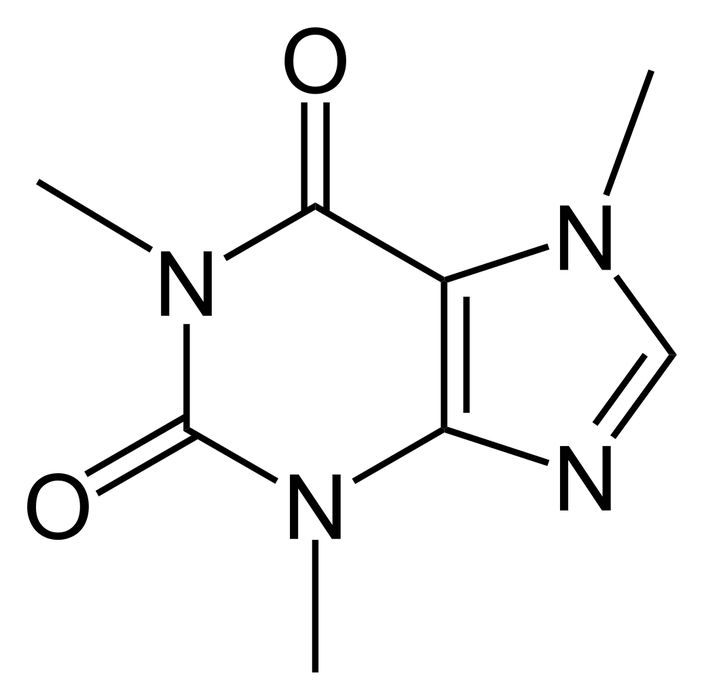
Skeletal formula of caffeine (1,3,7-trimethylxanthine).
Credit: Benjah-bmm27 / Wikimedia Commons

License: Public domain
Rendered from SVG to PNG, whitespace trimmed and placed on white
What it is
Caffeine is a naturally occurring compound, chemically 1,3,7-trimethylxanthine. Its CAS number is 58-08-2. It is found naturally in coffee, tea and cocoa, and it is also added to some foods and drinks. [2,3,5]
What it does and why it is used
Caffeine stimulates the central nervous system. In moderate doses it increases alertness and reduces sleepiness, which is why people drink it and why it is added to some drinks and to products marketed for weight loss and sports performance. [3]
Regulatory status and health context
Canada
Health Canada regulates caffeine that is added to foods. Its suggested daily maximums are 400 mg for healthy adults, 300 mg for people who are planning a pregnancy, pregnant or breastfeeding, and 2.5 mg per kg of body weight for children. [2]
United States
For most adults, FDA cites 400 mg a day, about two to three 12-fluid-ounce cups of coffee, as an amount not generally associated with negative effects. FDA took action against pure and highly concentrated caffeine products, and it notes that medical experts advise against energy drinks for children and teens. Food companies are responsible for making sure any use of caffeine in their products is safe. [1]
European Union
EFSA's 2015 opinion concluded that single doses up to 200 mg, and daily intakes up to 400 mg, do not raise safety concerns for healthy adults, except in pregnancy. [3] Under Regulation (EU) No 1169/2011, drinks other than coffee and tea that contain more than 150 mg of caffeine per litre must carry the statement "High caffeine content. Not recommended for children or pregnant or breast-feeding women", followed by the caffeine content. [4]
Environmental notes
The sources used here do not assess caffeine as an environmental concern and do not provide data for a rating. [1–4]
Quick facts
- CAS: 58-08-2. [5]
- Main sources: coffee, tea, cocoa, colas and energy drinks. [2,3]
- Healthy adults: up to 400 mg a day (Canada, US and EU). [1–3]
- Pregnancy: 300 mg a day (Health Canada) or 200 mg a day (EFSA). [2,3]
- Danger sign: pure or highly concentrated caffeine can be fatal in small amounts. [1]
Sources
All URLs were fetched on 2026-11-10. Source publication dates differ from this draft's review date.