
Fragrance and flavourMedicines and health
Camphor: the chest-rub and moth-repellent scent that is dangerous for small children to swallow
CAS 76-22-2.Also known as 2-bornanone, bornan-2-one, DL-camphor, and synthetic camphor.
Editorial draft Last reviewed 11 November 2026 About 841 words
CC INDEX
How it works50/100 Moderate
Swallowed camphor can cause seizures quickly, and poisoning cases in babies and toddlers are well described. Most household use is on the skin or in vaporizers, where it is usually safe when used as directed, and exposure to harmful amounts is uncommon. US rules removed camphorated oil from the market, but other products rely on labels and safe storage, so the score sits in the moderate band.
An editorial summary of this article’s cited evidence. It isn’t medical advice or a personal risk estimate.
Age index
What is the age index?Which age groups are more affected by this chemical’s possible health issues, based on this article’s sources.
- Pregnancy Unborn babies Not well studied
- Infants 0 to 1 Higher concern
- Young children 1 to 5 Higher concern
- Children 6 to 12 Moderate
- Teens 13 to 19 Moderate
- Adults 20 to 64 Moderate
- Older adults 65 and over Moderate
- Infants (higher concern): Poisonings reported from swallowed vaporizer liquid and over-applied rubs
- Young children (higher concern): Even a small swallowed piece can cause seizures within minutes
- The poisoning cases described by the sources involve babies and toddlers; swallowing camphor is dangerous at any age.

Illustration of camphor and a chest-rub-style ointment. Camphor is used in rubs, vaporizer products and some moth repellents.
Credit: Chemical Century; AI-generated illustration
License: CC0 1.0
Illustration, not a photograph of a specific product. Resized and cropped for the web.
The cool, medicinal smell of a chest rub on a winter night, a vaporizer by a child's bed or moth repellent in a closet is often camphor. Used on the skin as directed it is a familiar comfort, but swallowing even a small amount can cause seizures within minutes, and the poisoning cases experts describe involve babies and toddlers. Children have also been poisoned when camphor rubs were applied more often than the label said or covered with extra layers of clothing. Knowing which products contain camphor, and keeping them closed and out of reach, turns a common household item back into a safe one.
Everyday exposure: where you meet it and how much
Camphor is a white substance with a strong smell that is commonly used in skin ointments and gels for cough and muscle aches. [3] MedlinePlus lists nasal decongestants, camphorated oil, some moth repellents and topical pain relievers among the products that contain it. [3] Poison Control adds that camphor is used in products meant to be added to vaporizer water, where it is the most common active ingredient, dissolved in alcohol to relieve coughing. [1,2]
Used as directed, vaporizer products are usually safe, because only a small amount is added to a large volume of water. [1,2] The danger comes from swallowing camphor, or from applying skin products to children too often. [1]
Known and suspected harms
Evidence labels are editorial summaries, not individual risk predictions: established means recognized under the stated conditions; probable means a likely contribution with uncertainty; possible means limited evidence; disputed means assessors disagree. These labels do not describe how common an effect is.
- Established — seizures and poisoning if swallowed: even a small amount of camphor is dangerous if swallowed, and seizures can begin within a few minutes. [1] Camphor is absorbed quickly; early symptoms can include mouth and throat irritation, nausea, vomiting and stomach pain, but seizures may be the first sign. [2] Other symptoms include agitation, hallucinations, twitching, muscle spasms, slow breathing and unconsciousness. [3] In one case, a 22-month-old boy had a seizure lasting more than an hour after eating a small piece of camphor placed in an apartment for roach control. [1]
- Established — poisoning from over-applied skin products in children: camphor poisoning has occurred when skin preparations containing camphor were applied to children more often than the label recommended, or covered with extra layers of clothing. [1]
- Established — undiluted vaporizer liquid is poisonous: once diluted in a vaporizer, toxicity is unlikely, but the undiluted product is potentially poisonous and camphor is its most dangerous ingredient. [2] In one case, a caregiver accidentally gave a 10-month-old boy vaporizer liquid instead of cold medicine, and he needed intensive care before recovering. [2]
Reducing avoidable exposure and harm
Use camphor skin products exactly as the label directs, and do not apply them to children more often than recommended or cover them with extra clothing. [1] Read vaporizer medicine instructions fully, close the container tightly after use, and keep the vaporizer and its liquid out of children's reach; steam vaporizers also carry a burn risk. [2] Store camphor products, including moth repellents, out of the sight and reach of children and pets. [1] If camphor is swallowed, seek medical help right away and do not make the person vomit unless told to; wash camphor medicine off the skin with soap and lukewarm water. [3]
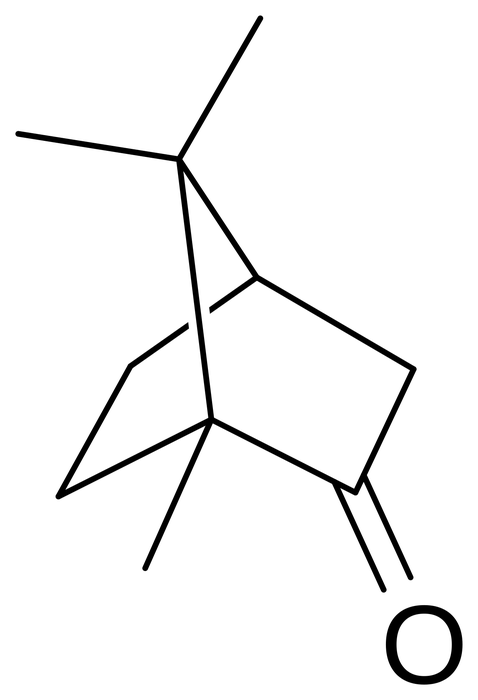
Skeletal structure of (+)-camphor.
Credit: Innerstream / Wikimedia Commons

License: Public domain
Rendered from SVG to PNG, whitespace trimmed and placed on white
What it is
Camphor (CAS 76-22-2), also called 2-bornanone, is a white, strong-smelling compound. [3,6]
What it does and why it is used
Camphor is used in ointments and gels for cough and muscle aches, in vaporizer products intended to relieve coughing, and as a moth repellent. [1,2,3]
Regulatory status and health context
Canada
The sources used for this review do not cover camphor's status in Canada, so we do not summarize it here.
United States
All drug products containing camphorated oil are on FDA's list of drug products withdrawn or removed from the market for reasons of safety or effectiveness. [4]
European Union
FDA notes that a 2023 EU amendment added camphor to the list of fragrance allergens that must be named on cosmetic labels above set levels. [5]
Environmental notes
The sources used for this review focus on poisoning and do not assess camphor's environmental effects, so we do not summarize them here.
Quick facts
- CAS: 76-22-2. [6]
- Where: chest and muscle rubs, vaporizer liquids, some moth repellents. [1,2,3]
- Main danger: seizures if swallowed, sometimes within minutes. [1,2]
- Most at risk: babies and toddlers. [1,2]
Sources
All URLs were fetched on 2026-11-11. Source publication dates differ from this draft's review date.
- Poison Control (National Capital Poison Center): Essential oils, poisonous when misused.
- Poison Control (National Capital Poison Center): Vaporizer medicine, dangerous to swallow.
- MedlinePlus: Camphor overdose.
- eCFR: 21 CFR 216.24, drug products withdrawn or removed from the market for reasons of safety or effectiveness.
- US FDA: Allergens in cosmetics.
- PubChem PUG REST: camphor synonyms.