
Water, air and residuesFood and drink
Chlorpyrifos: an insecticide once common on fruit, now banned in Canada and the EU over risks to children's brain development
CAS 2921-88-2.Also known as chlorpyriphos, O,O-diethyl O-3,5,6-trichloro-2-pyridyl phosphorothioate, and organophosphate insecticide.
Editorial draft Last reviewed 11 November 2026 About 811 words
CC INDEX
How it works60/100 Moderate
Regulators in the EU and Canada ended all chlorpyrifos uses after reviews found developmental neurotoxicity in animal studies and epidemiological links to poorer neurodevelopment in children, and the EU could not rule out genotoxicity. Exposure from food has fallen as uses were cancelled, and US use is now limited to a short list of crops, which keeps the score at the top of the moderate band.
An editorial summary of this article’s cited evidence. It isn’t medical advice or a personal risk estimate.
Age index
What is the age index?Which age groups are more affected by this chemical’s possible health issues, based on this article’s sources.
- Pregnancy Unborn babies Higher concern
- Infants 0 to 1 Higher concern
- Young children 1 to 5 Higher concern
- Children 6 to 12 Moderate
- Teens 13 to 19 Not well studied
- Adults 20 to 64 Not well studied
- Older adults 65 and over Not well studied
- Pregnancy (higher concern): Exposure during development linked to poorer neurodevelopment
- Infants (higher concern): Developing brain
- Young children (higher concern): Developing brain
- Children (moderate): Neurodevelopmental findings in children

Illustration of fresh fruit being rinsed. Apples, tart cherries, citrus, peaches and strawberries are among the remaining US crop uses EPA has listed for chlorpyrifos.
Credit: Chemical Century; AI-generated illustration
License: CC0 1.0
Illustration, not a photograph of a specific product. Resized and cropped for the web.
Chlorpyrifos is an insecticide that was once widely used on fruit and other crops, so residues could end up in the apples and snacks packed in children's lunches. The biggest worries have centred on early childhood, when the developing brain may be most vulnerable. Animal studies and research in children linked it to poorer brain development, which led Canada and the European Union to end its use, while the US now limits it to a short list of crops. For most families today, exposure from food has fallen a great deal, but its story shows why regulators look so closely at children.
Everyday exposure: where you meet it and how much
Chlorpyrifos is an organophosphate insecticide, acaricide and miticide used mainly to control foliage and soil-borne insect pests. [1] People can be exposed through residues on food and in drinking water. In its 2020 human health risk assessment, EPA found that risks from chlorpyrifos residues in food alone were not of concern, but that drinking water added significantly to those risks; when all registered uses were considered, its levels of concern were exceeded. [1]
Uses have shrunk sharply. In the US the registrant asked to cancel food and feed uses except for 11 crops in certain states: alfalfa, apple, asparagus, tart cherry, citrus, cotton, peach, soybean, strawberry, sugar beet and wheat. [1] In Canada all chlorpyrifos pesticides are cancelled, and any use has been prohibited since December 10, 2023. [2] In the EU, authorisations had to be withdrawn by February 16, 2020. [3]
Known and suspected harms
Evidence labels are editorial summaries, not individual risk predictions: established means recognized under the stated conditions; probable means a likely contribution with uncertainty; possible means limited evidence; disputed means assessors disagree. These labels do not describe how common an effect is.
- Probable — harm to brain development in children: the EU's decision notes developmental neurotoxicity effects in a rat study, and epidemiological evidence of an association between exposure to chlorpyrifos or chlorpyrifos-methyl during development and adverse neurodevelopmental outcomes in children. Peer reviewers also considered it appropriate to classify chlorpyrifos as toxic for reproduction, category 1B. [3]
- Possible — genotoxicity: EFSA concluded it could not be excluded that chlorpyrifos has genotoxic potential, since positive results were found in a number of laboratory and animal studies. As a result, no health-based reference values could be set. [3]
- Disputed — whether current food residues in the US are a risk: for years EPA said the science on neurodevelopmental effects remained unresolved. [1] It revoked all tolerances in 2021 after a court order, but a 2023 appeals court ruling put the tolerances back into effect, and EPA has since proposed revoking tolerances tied to cancelled food uses. Tolerances remain until a final rule is issued. [1]
Reducing avoidable exposure and harm
For consumers, the main change is regulatory: chlorpyrifos can no longer be used in Canada or the EU, and its US food uses have been narrowed. [1–3] The sources used here do not give household advice on removing residues.
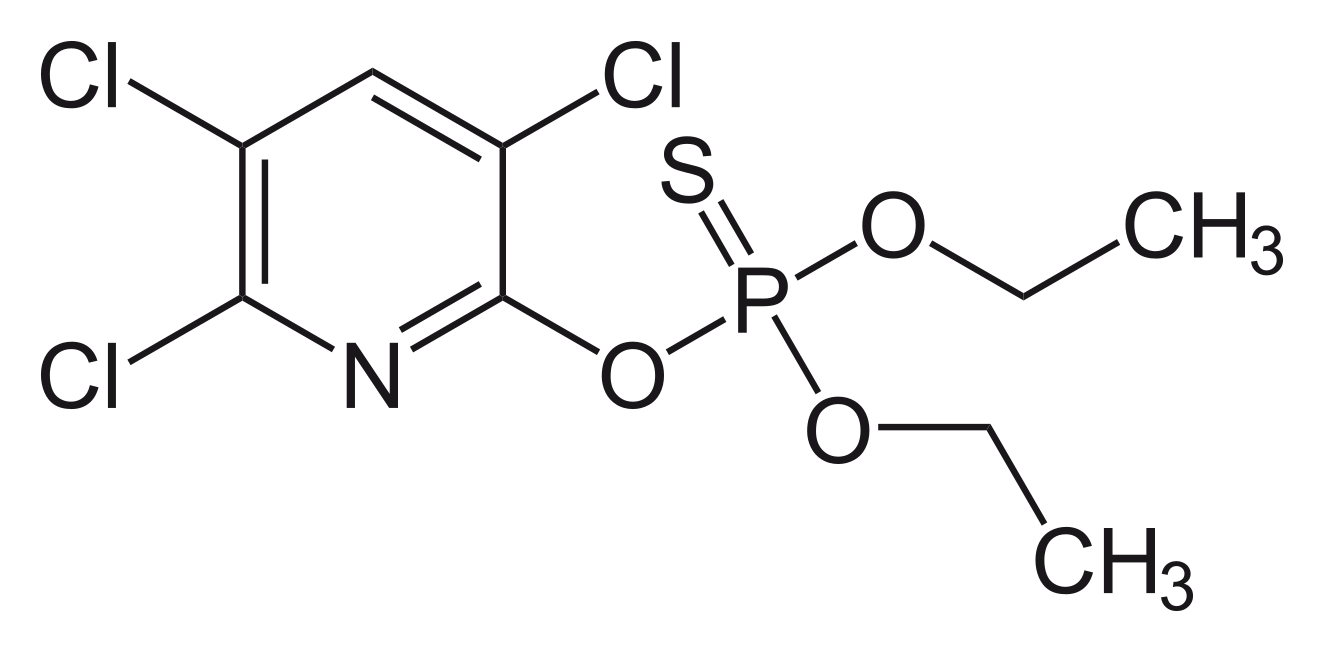
Chemical structure of chlorpyrifos, an organophosphate insecticide.
Credit: NEUROtiker / Wikimedia Commons

License: Public domain
Rendered from SVG to PNG, whitespace trimmed and placed on white
What it is
Chlorpyrifos (CAS 2921-88-2) is an organophosphate insecticide. [1,4]
What it does and why it is used
It controls insects, mites and other pests on crops and has been used in agriculture, ornamental production, forestry and mosquito control. [1,2]
Regulatory status and health context
Canada
Health Canada's re-evaluation, updated in December 2021, cancelled all chlorpyrifos pesticides. Sale has been prohibited since December 10, 2022, and any use since December 10, 2023. [2]
United States
EPA revoked all chlorpyrifos tolerances in August 2021. After the Eighth Circuit's ruling, all tolerances were back in effect as of December 28, 2023. [1] In December 2024 EPA proposed revoking all tolerances associated with cancelled food uses; the comment period closed in March 2025, and tolerances stay in place until a final rule is issued. [1]
European Union
Implementing Regulation (EU) 2020/18 did not renew approval of chlorpyrifos. Member states had to withdraw authorisations by February 16, 2020, and any grace period ended by April 16, 2020. [3]
Environmental notes
EPA says it continues to work to protect farmworkers, endangered species and their habitats. [1] Drinking water exposure in certain watersheds was a central part of EPA's risk findings. [1]
Quick facts
- CAS: 2921-88-2. [4]
- Type: organophosphate insecticide. [1]
- Canada: all uses prohibited since December 10, 2023. [2]
- EU: not renewed; authorisations withdrawn by February 16, 2020. [3]
- US: proposed rule to revoke tolerances for cancelled food uses; 11 crops remain in certain states. [1]
Sources
All URLs were fetched on 2026-11-11. Source publication dates differ from this draft's review date.