
Ethylene glycol: the sweet-tasting antifreeze that is a serious poison for people and pets
CAS 107-21-1.Also known as ethane-1,2-diol, 1,2-ethanediol, monoethylene glycol, and glycol.
Editorial draft Last reviewed 11 November 2026 About 838 words
CC INDEX
How it works60/100 Moderate
Swallowed ethylene glycol is a well-documented and potentially fatal poison, and its sweet taste makes accidental drinking by people and pets a real hazard. Everyday exposure that causes harm is uncommon, and skin contact or vapour at room temperature is generally not harmful. Controls rely mainly on safe storage rather than limits, so the score sits at the top of the moderate band.
An editorial summary of this article’s cited evidence. It isn’t medical advice or a personal risk estimate.
Age index
What is the age index?Which age groups are more affected by this chemical’s possible health issues, based on this article’s sources.
- Pregnancy Unborn babies Not well studied
- Infants 0 to 1 Moderate
- Young children 1 to 5 Moderate
- Children 6 to 12 Moderate
- Teens 13 to 19 Moderate
- Adults 20 to 64 Moderate
- Older adults 65 and over Moderate
- Harm comes from swallowing it, which is dangerous at any age; the sources do not rank age groups, but its sweet taste is known to attract pets.

Illustration of a home garage. Antifreeze, the most common source of ethylene glycol poisoning, should be capped and stored out of reach of children and pets.
Credit: Chemical Century; AI-generated illustration
License: CC0 1.0
Illustration, not a photograph of a specific product. Resized and cropped for the web.
Topping up a car's antifreeze or de-icing a windshield are ordinary chores, and the bright liquid in the jug is often ethylene glycol. It has no smell and tastes sweet, which is exactly what makes a puddle on the garage floor or a drink poured into an unmarked bottle so dangerous for a curious child, a pet or an unsuspecting adult. At first a person may only seem drunk, but within hours it can damage the kidneys and other organs, and swallowing it can be fatal without fast treatment. Simple habits, such as wiping up spills, keeping jugs capped and stored high, and never decanting it into drink containers, protect the whole household, pets included.
Everyday exposure: where you meet it and how much
Ethylene glycol is a colourless, odourless, sweet-tasting chemical, and most ethylene glycol poisonings come from swallowing antifreeze. [1] MedlinePlus lists antifreeze, car-wash fluids, de-icing products, detergents, vehicle brake fluids, industrial solvents, paints and cosmetics among household products that may contain it. [1] ATSDR adds that automotive antifreeze often has a yellow-green fluorescent colour, and that ethylene glycol is also used in some stamp-pad inks and ballpoint pens and to make plastics. [3]
Swallowing is by far the most important route. Skin absorption is negligible, and breathing harmful amounts is unlikely at room temperature, though heated or sprayed liquid can irritate the airways. [3]
Known and suspected harms
Evidence labels are editorial summaries, not individual risk predictions: established means recognized under the stated conditions; probable means a likely contribution with uncertainty; possible means limited evidence; disputed means assessors disagree. These labels do not describe how common an effect is.
- Established — poisonous if swallowed, with kidney failure and death possible: the first effect feels like being drunk; within a few hours nausea, vomiting, convulsions, stupor or coma can follow. [1] It can damage the brain, lungs, liver and kidneys and cause severe acid build-up in the blood, shock, organ failure and death. [1] Drinking even 1 to 3 ounces can damage the kidneys if not treated, and larger amounts can be fatal. [3] Kidney damage may be permanent. [2]
- Established — highly toxic to pets: antifreeze has a sweet taste that attracts animals and can cause fatal kidney failure; as little as 1 to 2 tablespoons can poison a medium-sized dog. [4]
- Established — skin contact and low vapour levels generally not harmful: skin contact with the liquid or breathing low vapour levels is generally not harmful or causes only minor irritation; very few people develop an allergic rash. [3]
Reducing avoidable exposure and harm
Dispose of antifreeze properly and do not let pets drink it. [4] Because it has no smell and tastes sweet, [1] keep it in its original, capped container out of reach, wipe up spills and leaks, and never store it in drink bottles; these steps follow from the hazards the sources describe. Some antifreezes use propylene glycol instead; larger amounts usually have to be swallowed to poison an animal, though it can still cause serious illness. [4] If someone may have swallowed ethylene glycol, get medical help right away and do not make them vomit unless told to. [1] Treatment works when started early and includes supportive care, dialysis and a specific antidote. [3,4]
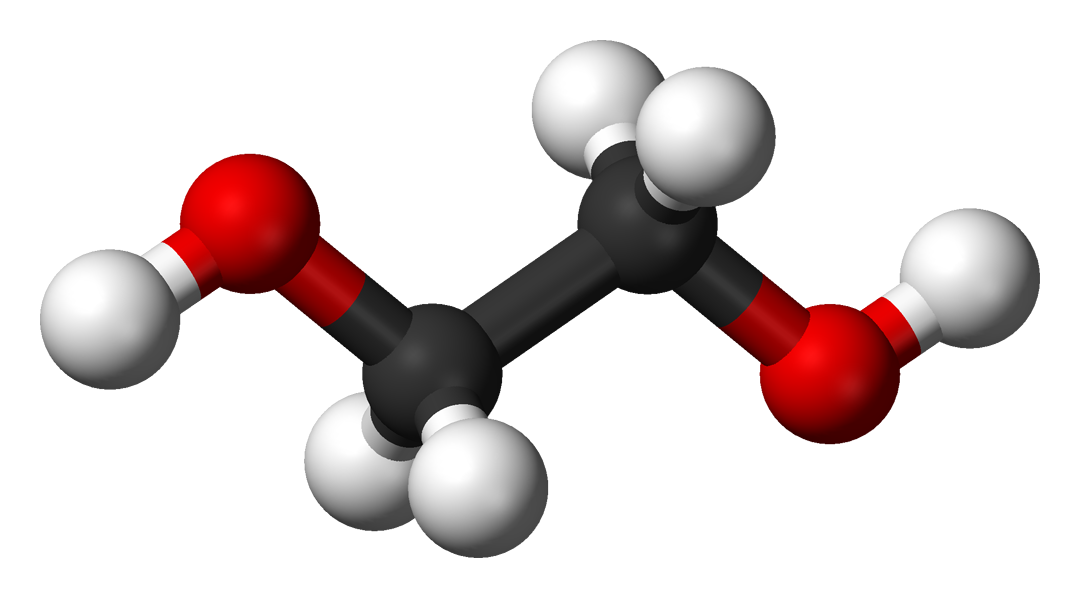
Ball-and-stick model of the ethylene glycol molecule.
Credit: Ben Mills / Wikimedia Commons

License: Public domain
Background placed on white
What it is
Ethylene glycol (CAS 107-21-1), chemically ethane-1,2-diol, is a clear, odourless, slightly thick liquid with a sweet taste. [3,6]
What it does and why it is used
Its low freezing point and high boiling point make ethylene glycol useful as antifreeze and de-icer, and it is produced in large amounts for chemical manufacturing, including plastics, films and solvents. [3]
Regulatory status and health context
Canada
After a Priority Substances List assessment, Canada concluded in 2010 that ethylene glycol is not entering the environment in amounts or conditions that may be dangerous to human life or health, and proposed no further action under the Canadian Environmental Protection Act. [5]
United States
ATSDR guidance for emergency staff describes treatment with supportive care, hemodialysis and an antidote such as fomepizole or ethanol. [3]
European Union
The sources used for this review do not cover ethylene glycol's EU status, so we do not summarize it here.
Environmental notes
Canada's assessment found that estimates of general-population exposure from the environment and consumer products such as latex paint were not of concern. [5]
Quick facts
- CAS: 107-21-1. [3]
- Most common source of poisoning: antifreeze. [1]
- Taste and smell: sweet, no odour. [1]
- Main danger: kidney failure and death if swallowed and untreated. [1,3]
- Pets: 1 to 2 tablespoons can poison a medium-sized dog. [4]
Sources
All URLs were fetched on 2026-11-11. Source publication dates differ from this draft's review date.
- MedlinePlus: Ethylene glycol poisoning.
- MedlinePlus: Antifreeze poisoning.
- ATSDR: Medical management guidelines for ethylene glycol.
- Texas Department of State Health Services: Tips to keep your pet safe from winter and holiday hazards.
- Health Canada: Ethylene glycol risk assessment.
- PubChem PUG REST: ethylene glycol synonyms.