
Ibuprofen: familiar pain relief with important limits
CAS 15687-27-1. Also known as Advil, Motrin, and racemic ibuprofen.
Editorial draft Last reviewed 8 November 2026 About 904 words
Everyday exposure: where you meet it and how much
Ibuprofen exposure comes from taking a medicine, including some cold and combination remedies—not just the familiar standalone pain tablet. Check the active ingredient, strength per unit and number of units; taking two products containing ibuprofen adds their doses. Amount and duration matter. EMA's high-dose cardiovascular review concerns systemic treatment at 2,400 mg/day or more; that is a risk-study threshold, not an instruction to take that dose. Follow your own product label or prescription. [1,2]
Known and suspected harms
Evidence labels are editorial summaries, not individual risk predictions: established means recognized under the stated conditions; probable means a likely contribution with uncertainty; possible means limited evidence; disputed means assessors disagree. These labels do not describe how common an effect is.
- Established — ulcers, gastrointestinal bleeding and perforation: ibuprofen can cause serious injury to the stomach or intestine, sometimes without warning. Older adults, people with previous ulcers or bleeding, and those using anticoagulants, aspirin, other NSAIDs or certain other medicines need particular caution. Longer use and higher doses can increase risk. [1]
- Established — cardiovascular risk, especially with high systemic doses: EMA found a small increase in heart attack and stroke risk at or above 2,400 mg/day. Its lack of an observed increase up to 1,200 mg/day in that review does not establish zero risk for every patient or remove other harms. People with heart or circulatory disease are particularly important to assess. [1,2]
- Established — fetal kidney problems and low amniotic fluid with NSAID exposure later in pregnancy: Health Canada advises avoiding NSAIDs at approximately 20–28 weeks unless a professional recommends them, and says they must not be used beyond 28 weeks. This is not a concern restricted to prescription-strength products. [4]
- Established — serious allergic reactions can occur: swelling or trouble breathing requires urgent attention. People with relevant medicine allergies or certain asthma histories should discuss suitability with a clinician. [1]
- Possible — clinically important reduction of low-dose aspirin's protection during prolonged combined use: laboratory interference is documented, but EMA says the long-term clinical impact remained uncertain. Discuss the combination with a pharmacist instead of stopping prescribed aspirin. [2]
Reducing avoidable exposure and harm
Use the lowest effective dose for the shortest necessary time, as directed, and avoid accidental duplication across products. Ask a pharmacist to check interactions, kidney disease, heart disease, dehydration or pregnancy concerns. Do not change prescribed treatment solely because an ingredient article describes a hazard. Chest pain, one-sided weakness, breathing difficulty, bloody vomit or black stools need urgent medical attention rather than online interpretation. [1,2,4]
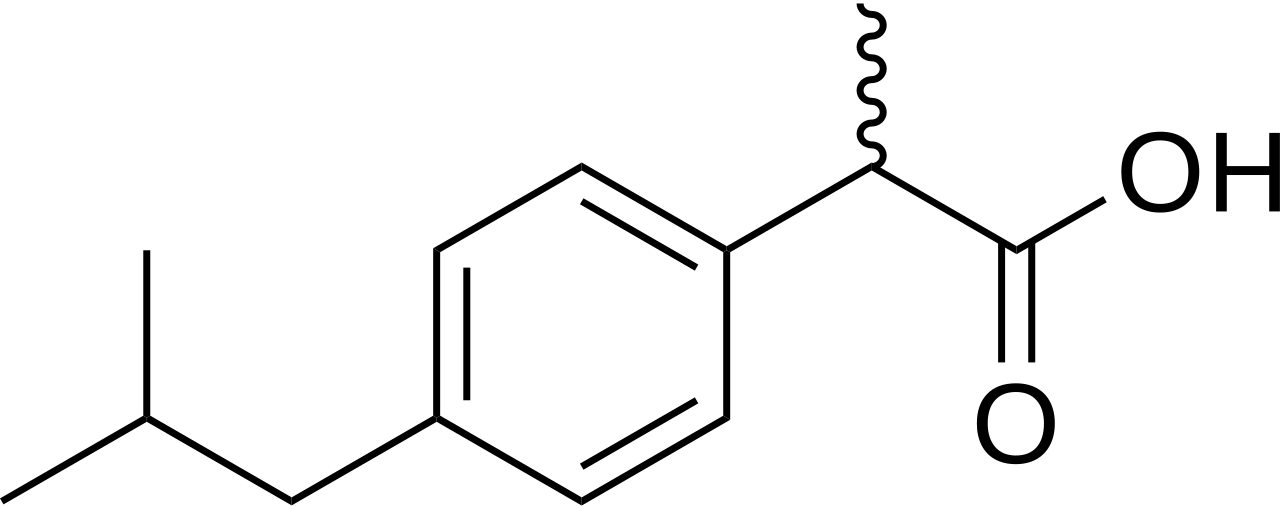
Ibuprofen structural formula.
Credit: Harbin / Wikimedia Commons

License: Public domain (simple structural formula)
Wikimedia-provided thumbnail; scaled from original, no content edits
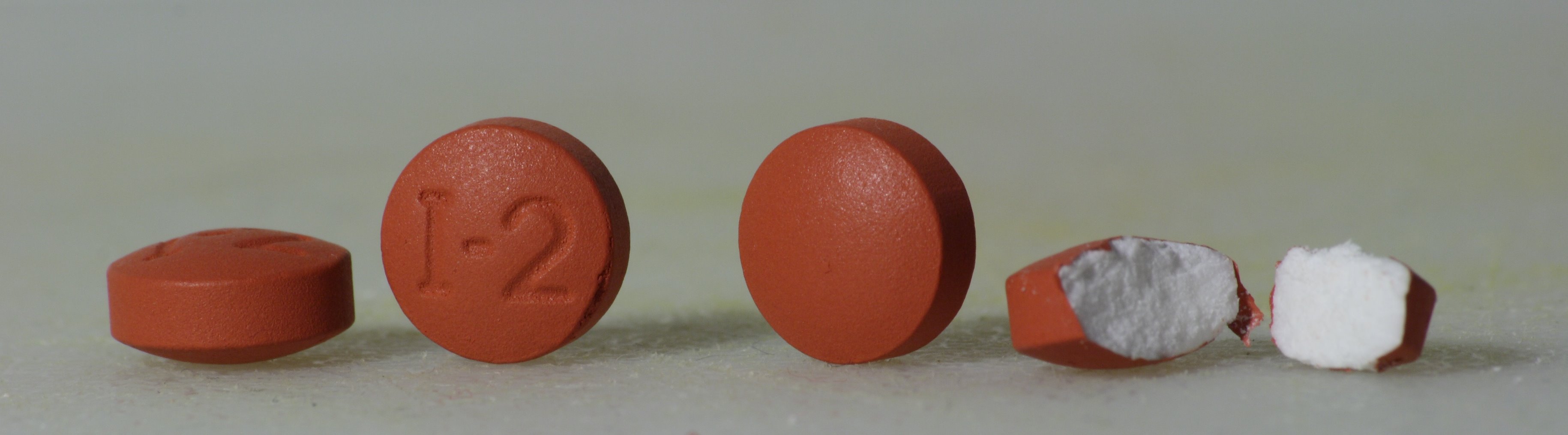
Coated 200 mg ibuprofen tablets. Appearance is not a safe method of identifying medicines.
Credit: Ragesoss / Wikimedia Commons

License: CC BY-SA 3.0
Original JPEG unmodified
What it is
Ibuprofen is a nonsteroidal anti-inflammatory drug, or NSAID, used for pain, fever and inflammation. Its CAS number is 15687-27-1. It is a medicine with intended benefits as well as recognized harms; an article about everyday chemical exposure should make both visible. [1,2,5]
What it does and why it is used
Ibuprofen reduces the body's production of substances involved in pain, fever and inflammation. Prescription and nonprescription products exist, and formulations differ. The relevant exposure is the active dose from all products combined, not just the number of brand names on the shelf. Follow the directions for the actual product rather than transferring a dosing instruction from another formulation. [1]
Regulatory status and health context
Canada
Health Canada's 2016 prescription-list notice describes exceptions for certain oral products, including units providing 400 mg or less and modified-release units providing 600 mg or less. These are classification thresholds, not dosing advice or a substitute for current product labelling. [3]
Its pregnancy advisory concerns rare but serious fetal kidney problems and resulting low amniotic fluid. The established harm and timing cautions above apply even when the medicine was bought without a prescription. Anyone pregnant with concerns about use should consult a professional rather than calculate personal harm from a general warning. [4]
United States
The US National Library of Medicine's MedlinePlus describes prescription and nonprescription use and carries warnings for cardiovascular events, gastrointestinal injury and interactions. People with heart, kidney or liver disease, previous stomach bleeding, asthma or relevant allergies should discuss suitability with a clinician. Familiarity and easy availability do not remove these precautions. [1]
European Union
EMA describes nationally authorised prescription and over-the-counter products. Its 2015 review found the high-dose cardiovascular risk outlined above and recommends the lowest effective dose for the shortest necessary duration. Its systemic-dose conclusions should not be transferred directly to gels or sprays. The review also left uncertainty about the long-term clinical significance of interference with low-dose aspirin. [2]
Environmental notes
MedlinePlus recommends a take-back programme for unwanted medicine and says not to flush ibuprofen. Ask a pharmacist about local return options. These sources do not provide enough environmental data to assign a quantified aquatic-risk rating. Disposal advice and ecological risk estimates are different kinds of claims. [1]
Quick facts
- CAS: 15687-27-1. [5]
- Family and purpose: NSAID; pain, fever and inflammation relief. [1,2]
- Established cautions: gastrointestinal bleeding, cardiovascular events and later-pregnancy fetal effects, under the conditions described above. [1,2,4]
- Possible interaction concern: long-term reduction of low-dose aspirin's clinical protection remains uncertain. [2]
- Unwanted medicine: use a take-back option, not the toilet. [1]
Sources
All URLs were fetched on 2026-11-08. Source publication dates differ from this draft's review date.