
Nutrients and supplementsMedicines and health
Iron supplements: essential for some people, and a serious poisoning risk for young children
CAS 7720-78-7.Also known as ferrous sulfate, ferrous sulphate, ferrous gluconate, ferrous fumarate, iron pills, and elemental iron.
Editorial draft Last reviewed 10 November 2026 About 1032 words
CC INDEX
How it works58/100 Moderate
Iron is an essential nutrient, but a large accidental dose can be fatal to a child, and that risk is well documented. Most adults taking recommended doses face mainly stomach side effects. Exposure is deliberate and labelled, and child-resistant packaging and warnings are already required.
An editorial summary of this article’s cited evidence. It isn’t medical advice or a personal risk estimate.
Age index
What is the age index?Which age groups are more affected by this chemical’s possible health issues, based on this article’s sources.
- Pregnancy Unborn babies Moderate
- Infants 0 to 1 Higher concern
- Young children 1 to 5 Higher concern
- Children 6 to 12 Moderate
- Teens 13 to 19 Lower concern
- Adults 20 to 64 Moderate
- Older adults 65 and over Not well studied
- Pregnancy (moderate): Often take iron; stomach side effects
- Infants (higher concern): Accidental overdose can be fatal
- Young children (higher concern): Accidental overdose can be fatal
- Children (moderate): Keep supplements out of reach
- Adults (moderate): Stomach upset; iron overload in hemochromatosis

Illustration of iron tablets and iron-rich foods. Store iron supplements out of children's reach; tablets can look like sweets.
Credit: Chemical Century; AI-generated illustration
License: CC0 1.0
Illustration, not a photograph of a specific product. Resized and cropped for the web.
Iron supplements are a lifeline for many people with low iron, which can leave them tired, weak and struggling to concentrate, yet the same bottle on a kitchen counter can be dangerous to a curious toddler. An accidental overdose can be fatal for young children, which is why child-resistant caps and warnings matter so much. For adults, the everyday side effects are more ordinary: an upset stomach, nausea or constipation that can make a daily tablet hard to keep taking. People with an inherited condition that causes iron overload, and anyone on certain thyroid or Parkinson's medicines, should talk with a clinician first.
Everyday exposure: where you meet it and how much
Iron is a mineral the body needs to make hemoglobin, which carries oxygen in the blood. Most people get enough from food, including meat, seafood, beans, lentils, spinach and fortified flour and cereals. Supplements are common: ODS reports that 14% to 18% of Americans, and about 72% of pregnant women, use a supplement containing iron. Multivitamins for women typically provide 18 mg of iron, while many iron-only supplements provide 65 mg. [1]
The amount of iron in a supplement depends on its form. Ferrous sulfate is about 20% elemental iron by weight, ferrous fumarate about 33% and ferrous gluconate about 12%. Labels list the elemental iron, which is the figure that matters. The US tolerable upper intake level is 45 mg a day for adults and teens and 40 mg a day for younger children, although clinicians sometimes prescribe more to treat deficiency. [1]
Known and suspected harms
Evidence labels are editorial summaries, not individual risk predictions: established means recognized under the stated conditions; probable means a likely contribution with uncertainty; possible means limited evidence; disputed means assessors disagree. These labels do not describe how common an effect is.
- Established — accidental overdose can be fatal in young children: a single intake of more than 20 mg of iron per kg of body weight can cause corrosive injury to the intestine, shock and organ failure. Around 60 mg/kg can cause multisystem organ failure, coma and death. At least 43 US children died from swallowing high-dose iron supplements between 1983 and 2000. Child deaths fell after packaging and labelling changes. [1]
- Established — stomach upset, nausea and constipation at higher doses: doses of 45 mg a day or more may cause nausea and constipation, and other stomach effects are common with high doses. Taking iron with food can reduce these effects. [1]
- Established — iron overload in people with hereditary hemochromatosis: people with this genetic condition absorb too much iron. Without treatment, iron builds up and can damage the liver, heart and pancreas. Treatment includes avoiding iron and vitamin C supplements. [1]
- Established — reduced absorption of some thyroid and Parkinson's medicines: iron can reduce the absorption of levothyroxine, used for underactive thyroid, and levodopa, used for Parkinson's disease. Medicines that reduce stomach acid can also lower iron absorption. [1]
Reducing avoidable exposure and harm
Keep iron supplements, and multivitamins that contain iron, locked away or well out of children's sight and reach, in their child-resistant containers. If a child may have swallowed iron, call a poison centre or emergency services immediately, even if the child seems well. Take iron only as directed. Do not take more than the recommended dose without advice. Ask a pharmacist about spacing iron from thyroid or Parkinson's medicines and from calcium supplements. [1–3]
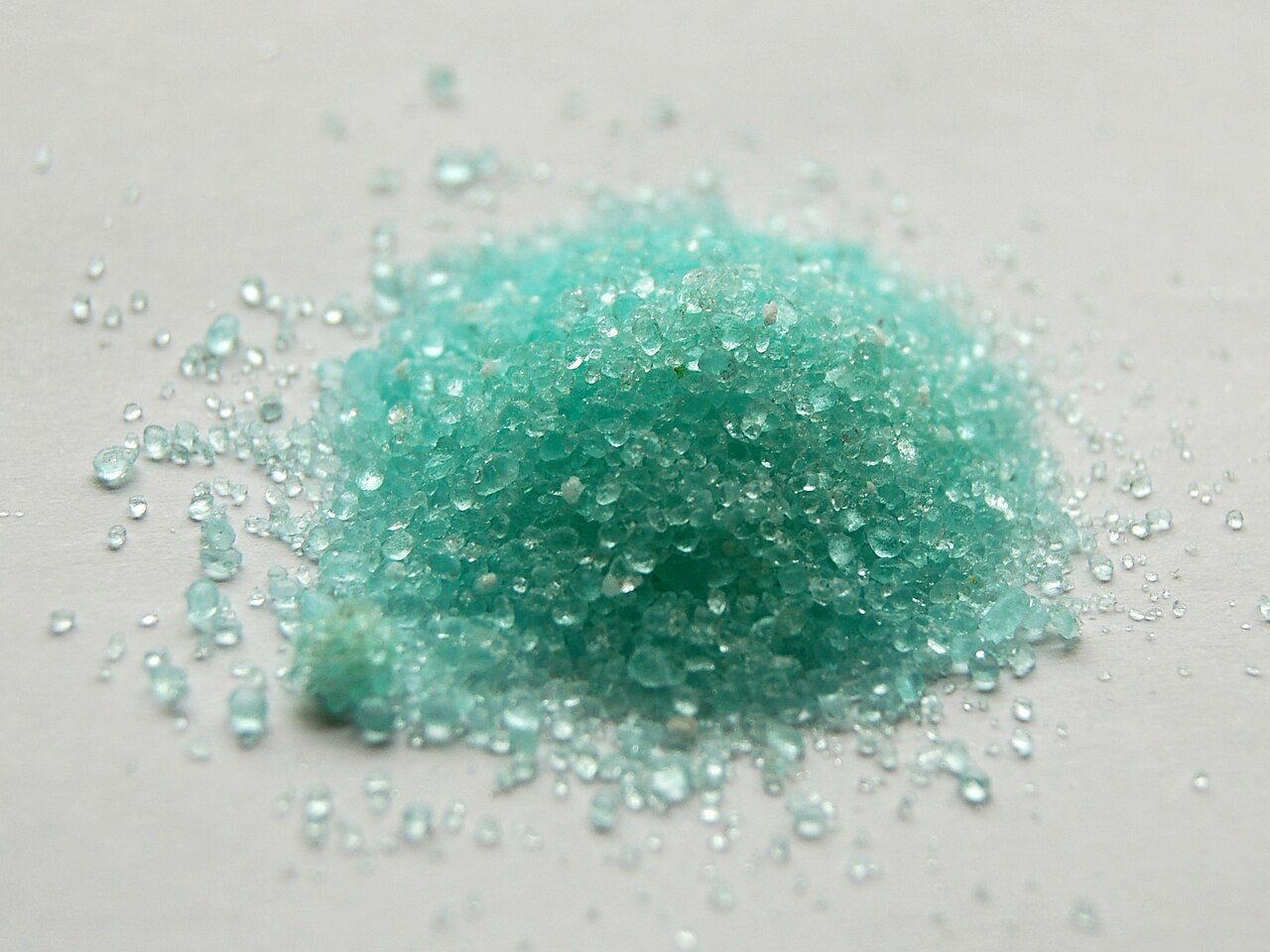
Iron(II) sulfate heptahydrate crystals, a hydrated form of the ferrous sulfate used in some supplements.
Credit: Benjah-bmm27 / Wikimedia Commons

License: Public domain
Wikimedia-provided thumbnail; scaled from original, no content edits
What it is
Supplements contain iron as salts or other compounds. The most common are ferrous (iron II) and ferric (iron III) salts such as ferrous sulfate, ferrous gluconate, ferric citrate and ferric sulfate. Ferrous sulfate's CAS number is 7720-78-7. Ferrous forms are more soluble and better absorbed than ferric forms. [1,5]
What it does and why it is used
Iron supplements prevent and treat iron deficiency and iron-deficiency anaemia, which can cause tiredness, weakness and difficulty concentrating. People at higher risk include pregnant women, infants and young children, women with heavy periods, frequent blood donors, and people with some gut conditions. Iron supplements can reduce the risk of iron-deficiency anaemia in pregnancy. [1]
Regulatory status and health context
Canada
Health Canada's multi-vitamin/mineral supplement monograph requires products with more than 250 mg of elemental iron per package to carry the statement "Keep out of reach of children. There is enough iron in this package to seriously harm a child", preceded by a prominent octagonal warning symbol. [3]
United States
FDA requires solid iron-containing supplements to carry this warning: "Accidental overdose of iron-containing products is a leading cause of fatal poisoning in children under 6. Keep this product out of reach of children. In case of accidental overdose, call a doctor or poison control center immediately." Since 1978, supplements with 250 mg or more of elemental iron per container must also be in child-resistant packaging. [1,2]
European Union
Directive 2002/46/EC on food supplements lists permitted iron sources, including ferrous sulfate. It requires maximum amounts to be based on upper safe levels. Labels must include a warning not to exceed the recommended daily dose and a statement that the product should be stored out of reach of young children. [4]
Environmental notes
The sources used here do not identify iron supplements as an environmental concern and do not provide data for a rating. [1,4]
Quick facts
- CAS (ferrous sulfate): 7720-78-7. [5]
- Purpose: prevent or treat iron deficiency. [1]
- Adult upper limit (US): 45 mg of iron a day, unless prescribed. [1]
- Danger dose for children: more than 20 mg/kg can cause serious injury. [1]
- Canada: packages with over 250 mg of iron must warn that they can seriously harm a child. [3]
- Key habit: store out of children's reach, even day to day. [1–4]
Sources
All URLs were fetched on 2026-11-10. Source publication dates differ from this draft's review date.