
Water, air and residuesHousehold materials
Lead: no known safe level, and still found in old pipes, paint and some imported goods
CAS 7439-92-1.Also known as Pb, lead metal, lead paint, lead pipes, and lead service lines.
Editorial draft Last reviewed 10 November 2026 About 1143 words
CC INDEX
How it works80/100 High
WHO says no level of lead exposure is known to be without harm, and effects on children's brains are permanent. Exposure has fallen sharply but continues from old pipes and paint, contaminated soil and dust, and some imported products. Strict limits apply in water, food, paint and toys.
An editorial summary of this article’s cited evidence. It isn’t medical advice or a personal risk estimate.
Age index
What is the age index?Which age groups are more affected by this chemical’s possible health issues, based on this article’s sources.
- Pregnancy Unborn babies Higher concern
- Infants 0 to 1 Higher concern
- Young children 1 to 5 Higher concern
- Children 6 to 12 Higher concern
- Teens 13 to 19 Moderate
- Adults 20 to 64 Moderate
- Older adults 65 and over Moderate
- Pregnancy (higher concern): Lead stored in bone can reach the fetus
- Infants (higher concern): Absorb more of a swallowed dose; developing brain
- Young children (higher concern): Hand-to-mouth contact with dust and soil; developing brain
- Children (higher concern): Lasting effects on brain development
- Adults (moderate): High blood pressure, kidney damage, anaemia
- Older adults (moderate): Lead builds up in bones over a lifetime

Illustration of common lead sources in older homes. Peeling paint, old plumbing and some glazed ceramics can contain lead; only testing can confirm it.
Credit: Chemical Century; AI-generated illustration
License: CC0 1.0
Illustration, not a photograph of a specific product. Resized and cropped for the web.
Lead lingers in older homes, in the paint on a window sill, in the dust a crawling baby touches, in old pipes that carry drinking water, and in some imported pottery, toys and traditional remedies. In young children, even low exposure can quietly affect learning and attention, and those effects on the developing brain do not go away. Adults can face high blood pressure, kidney damage and anaemia, and lead stored in a mother's bones can reach a baby during pregnancy. Because there is no known safe level, simple steps such as finding out whether an older home has lead pipes and having the water tested really matter.
Everyday exposure: where you meet it and how much
Lead is a naturally occurring metal, but its widespread presence in the environment comes mostly from human use. WHO lists pigments and paints, solder, stained glass, lead crystal glassware, ammunition, ceramic glazes, jewellery, toys and some traditional cosmetics and medicines as current or past sources. In Canadian homes the main concerns are old lead pipes and solder, old paint, and the dust and soil they contaminate. [1,2]
Canada's plumbing code allowed lead in the pipes that bring water to homes until 1975, so older homes and neighbourhoods may still have lead service lines, and solder, faucets or valves may also contain lead. More lead seeps into water that has sat in the pipes. Health Canada says food and drinking water are now the main routes of exposure for adults, while dust, old paint, soil and products matter most for young children. FDA has also warned about some imported cookware that can leach lead into food, and about lead in some ground cinnamon. Blood lead levels in Canada have fallen by more than 70% since 1978–1979, helped by measures such as the ban on leaded gasoline, but lead is still widely detected. [2,3,5]
Known and suspected harms
Evidence labels are editorial summaries, not individual risk predictions: established means recognized under the stated conditions; probable means a likely contribution with uncertainty; possible means limited evidence; disputed means assessors disagree. These labels do not describe how common an effect is.
- Established — lasting harm to children's brain development, including lower IQ: WHO says lead can permanently affect children's brain development. It can reduce IQ, shorten attention span, change behaviour and lower educational attainment. WHO adds that there is no known safe blood lead concentration. Young children can absorb up to 4 to 5 times as much of a swallowed dose as adults. [1]
- Established — high blood pressure, kidney damage and anaemia in adults: WHO lists anaemia, hypertension, kidney damage, effects on the immune system and toxicity to the reproductive organs. It attributes more than 3.5 million deaths worldwide in 2023 to lead, mainly through cardiovascular effects. Health Canada says there is sufficient evidence that blood lead levels below 5 µg/dL are associated with adverse health effects. [1,2]
- Established — exposure of the fetus during pregnancy from lead stored in bone: lead builds up in bones and teeth over time and can be released into the blood during pregnancy, exposing the developing fetus. [1]
- Probable — cancer in people: Health Canada's drinking water guideline describes lead as probably carcinogenic to humans. Health Canada's drinking water advice concentrates on effects on children's neurological development and on blood pressure and kidney problems in adults. [3,4]
Reducing avoidable exposure and harm
If your home was built before 1975, ask your plumber, water utility or municipality whether you have a lead service line, or have your water tested. Replacing lead service lines and any lead pipes or fittings is the most effective permanent fix; replacing only the municipal part can leave lead problems. Until then, use only cold tap water for drinking, cooking and baby formula, and run the water for about a minute after it has sat for a few hours. A tap-mounted filter certified for lead removal also helps if it is maintained. Pregnant and breastfeeding people with possible lead in their water should have it tested. Be cautious with peeling old paint, and with imported cookware, glazed ceramics, traditional remedies and cosmetics that may contain lead. [1–3,5]
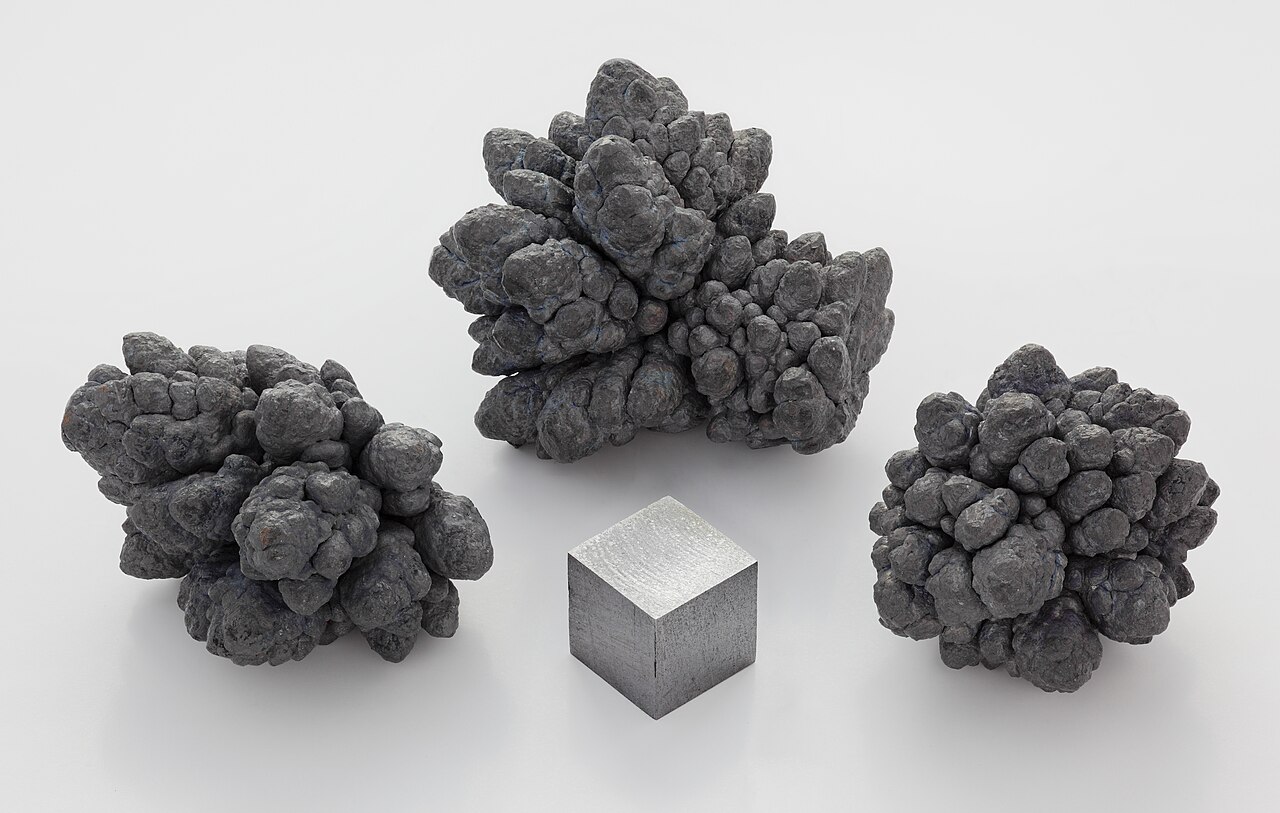
Electrolytic lead metal and a 1 cm³ lead cube.
Credit: Alchemist-hp (www.pse-mendelejew.de) / Wikimedia Commons

License: Free Art License 1.3
Wikimedia-provided thumbnail; scaled from original, no content edits
What it is
Lead is a soft, heavy, naturally occurring metal, chemical symbol Pb. Its CAS number is 7439-92-1. Once in the body it travels to the brain, liver, kidneys and bones and is stored in teeth and bones, where it builds up over time. [1,7]
What it does and why it is used
WHO says most lead used worldwide today goes into lead-acid batteries for motor vehicles. It is also used in pigments, solder, ammunition, glazes, crystal glassware and some other products, and older homes may still contain lead in pipes and paint. [1,3]
Regulatory status and health context
Canada
Canada's guideline value for lead in drinking water is 0.005 mg/L, lowered from 0.01 mg/L, and every effort should be made to keep levels as low as possible. Health Canada says it is one of the lowest values in the world. Health Canada's 2013 risk management strategy concluded that further measures to reduce Canadians' lead exposure were warranted. [2–4]
United States
FDA sets interim reference levels for dietary lead of 2.2 µg a day for children and 8.8 µg a day for women of childbearing age, and its Closer to Zero work aims to reduce children's exposure to lead and other metals from food. It has warned retailers about imported cookware that can leach lead, and continues to test ground cinnamon. [5]
European Union
Commission Regulation (EU) 2023/915 sets legal maximum levels for lead in a wide range of foods. Health Canada reports that the EU's limit for lead in drinking water is 0.01 mg/L. [3,6]
Environmental notes
WHO describes exposure from soil and dust contaminated by mining, smelting, battery recycling and the burning of lead-containing materials. Health Canada notes that environmental lead levels in Canada have declined significantly over recent decades. [1,2]
Quick facts
- CAS: 7439-92-1. [7]
- Symbol: Pb. [7]
- Safe level: no level of exposure is known to be without harm. [1]
- Canada drinking water: maximum 0.005 mg/L, as low as reasonably achievable. [4]
- Children: absorb up to 4 to 5 times more of a swallowed dose than adults. [1]
- Older homes: lead service lines were acceptable under Canada's plumbing code until 1975. [3]
Sources
All URLs were fetched on 2026-11-10. Source publication dates differ from this draft's review date.
- WHO: Lead poisoning, fact sheet.
- Health Canada: Lead.
- Health Canada: Water Talk, minimizing exposure to lead from drinking water distribution systems.
- Health Canada: Guidelines for Canadian Drinking Water Quality, summary table.
- FDA: Lead in food and foodwares.
- EUR-Lex: Commission Regulation (EU) 2023/915 on maximum levels for certain contaminants in food.
- PubChem PUG REST: lead synonyms.