
Melatonin: the popular sleep aid that has become a common accidental swallow for young children
CAS 73-31-4.Also known as N-acetyl-5-methoxytryptamine.
Editorial draft Last reviewed 11 November 2026 About 939 words
CC INDEX
How it works40/100 Mild
Short-term melatonin use appears safe for most adults, with mild side effects, but accidental ingestions by young children have risen sharply and long-term effects, especially in children, are unknown. Product content can differ from labels. Canada now requires a prescription for children's sleep use, while the US regulates it as a dietary supplement, so the score sits at the top of the mild band.
An editorial summary of this article’s cited evidence. It isn’t medical advice or a personal risk estimate.
Age index
What is the age index?Which age groups are more affected by this chemical’s possible health issues, based on this article’s sources.
- Pregnancy Unborn babies Not well studied
- Infants 0 to 1 Higher concern
- Young children 1 to 5 Higher concern
- Children 6 to 12 Moderate
- Teens 13 to 19 Moderate
- Adults 20 to 64 Lower concern
- Older adults 65 and over Moderate
- Infants (higher concern): Most accidental melatonin swallows reported involve children 5 and under
- Young children (higher concern): Most accidental swallows involve children 5 and under; some needed hospital care
- Health Canada says melatonin for sleep in anyone under 18 needs a prescription; NCCIH notes a lack of research in pregnancy and that it may stay active longer in older people.

Illustration of a bedroom at night. Gummy and chewable sleep supplements can look like sweets to young children.
Credit: Chemical Century; AI-generated illustration
License: CC0 1.0
Illustration, not a photograph of a specific product. Resized and cropped for the web.
Melatonin is the body's own sleep-timing hormone, and many adults now keep a bottle of supplements by the bed for jet lag or restless nights. Short-term use appears safe for most adults, but it can cause headaches, dizziness or sleepiness, and older adults may feel it for longer. The bigger worry is for young children, who can mistake chewable or gummy forms for sweets: in the US, accidental swallows have soared and sent some children to hospital. In Canada, melatonin for children's sleep now needs a prescription, so storing it like any medicine, high up and out of sight, is the simplest protection for a household.
Everyday exposure: where you meet it and how much
Melatonin is a hormone the body makes that helps regulate the sleep-wake cycle; supplements are most often made synthetically. [1,2] They are widely available as tablets, capsules, liquids and gummies, and US sales rose sharply between 2016 and 2020. [2] NCCIH says melatonin supplements may help with jet lag, delayed sleep-wake phase disorder, some sleep disorders in children, and anxiety before and after surgery, but there is not enough evidence to recommend it for chronic insomnia. [1]
In Canada, all licensed melatonin natural health products are for adults only. [3] Health Canada's 2015 safety review said melatonin should not be used for more than four weeks without consulting a health care professional. [4]
Known and suspected harms
Evidence labels are editorial summaries, not individual risk predictions: established means recognized under the stated conditions; probable means a likely contribution with uncertainty; possible means limited evidence; disputed means assessors disagree. These labels do not describe how common an effect is.
- Established — rising accidental ingestions in young children: from 2012 to 2021, yearly pediatric melatonin ingestions reported to US poison control centres rose 530%, and in 2020 melatonin became the substance children most often swallowed in poison-centre reports. [2] Most cases were unintentional, happened at home and involved children aged 5 or younger, and most children had no symptoms; but hospitalizations and serious outcomes also rose, five children needed a ventilator and two died, although the report could not confirm whether those deaths were caused by melatonin alone. [2]
- Established — mild side effects in short-term adult use: short-term use appears safe for most people; reported side effects in adults include headache, dizziness, nausea and sleepiness. Long-term safety is not well known. [1] Melatonin may stay active longer in older people and cause daytime drowsiness, and sleep-medicine guidelines recommend against its use in people with dementia. [1]
- Possible — effects on children's hormonal development: because melatonin is a hormone, it could affect puberty, menstrual cycles or prolactin levels, but this is not known. Side effects reported in children have usually been mild, such as drowsiness, bedwetting, headache, dizziness and agitation. [1] Health Canada's 2015 review found conflicting data on rare neurological side effects in children and adolescents. [4]
- Established — label content may not match: in a 2017 study of 31 supplements, the amount of melatonin in most did not match the label, and 26% contained serotonin. [1]
Reducing avoidable exposure and harm
Store melatonin safely, out of children's reach, as health care providers are urged to advise parents; the CDC report also suggests child-resistant packaging should be considered. [2] Health Canada recommends talking to a health care professional before giving melatonin to children and adolescents, and now requires a prescription for its sleep-related use under 18. [3,4] People who take other medicines, especially blood thinners, or who have epilepsy, should consult their health care provider, and pregnant or breastfeeding people should check with theirs first because research is lacking. [1]
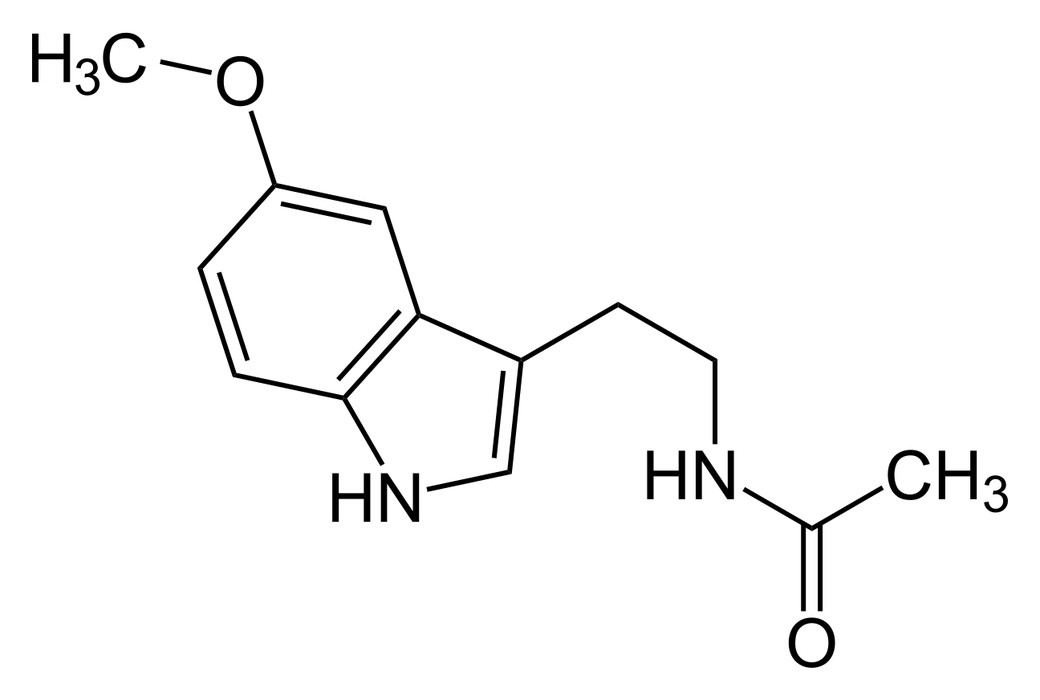
Skeletal structure of melatonin (N-acetyl-5-methoxytryptamine).
Credit: NEUROtiker / Wikimedia Commons

License: Public domain
Rendered from SVG to PNG, whitespace trimmed and placed on white
What it is
Melatonin (CAS 73-31-4), chemically N-acetyl-5-methoxytryptamine, is a naturally occurring hormone. [4,5]
What it does and why it is used
The body's melatonin helps set the sleep-wake cycle. [2] Supplements are used mainly to shift sleep timing, as with jet lag or shift work, and to shorten the time it takes to fall asleep. [1,4]
Regulatory status and health context
Canada
Melatonin is generally a natural health product licensed for adults only. Since June 2, 2026, melatonin sold for sleep-related use in children and adolescents under 18 is a prescription drug, because Health Canada considers a practitioner's supervision necessary to rule out underlying problems, advise on sleep habits and set the right dose. [3]
United States
Melatonin is regulated as a dietary supplement, which is less strict than the rules for prescription or over-the-counter drugs. [1,2] NCCIH notes that in several other countries it is available only by prescription. [1]
European Union
The sources used for this review do not cover melatonin's EU status, so we do not summarize it here.
Environmental notes
The sources used for this review focus on human health and do not assess environmental effects.
Quick facts
- CAS: 73-31-4. [5]
- What it is: the body's sleep-timing hormone, also sold as a supplement. [1,2]
- Child safety: US pediatric ingestions rose 530% from 2012 to 2021. [2]
- Canada: prescription required for sleep use under 18 since June 2026. [3]
- Label accuracy: amounts often differ from the label. [1]
Sources
URLs were fetched on 2026-11-10 or 2026-11-11. Source publication dates differ from this draft's review date.
- National Center for Complementary and Integrative Health: Melatonin, what you need to know.
- CDC MMWR: Pediatric melatonin ingestions, United States, 2012 to 2021.
- Health Canada: Notice of amendment, Prescription Drug List qualifier for pediatric melatonin use (June 2, 2026).
- Health Canada: Summary safety review, melatonin in children and adolescents (2015).
- PubChem PUG REST: melatonin synonyms.