
Skin and personal careMakeup and colour
Oxybenzone: a sunscreen filter under review, not a reason to skip sun protection
CAS 131-57-7.Also known as benzophenone-3, BP-3, and 2-hydroxy-4-methoxybenzophenone.
Editorial draft Last reviewed 10 November 2026 About 920 words
CC INDEX
How it works36/100 Mild
Oxybenzone is absorbed through the skin, but hormone-related harm in people is unproven. FDA has asked for more data and the EU has cut its allowed concentration, so regulatory attention is higher than the evidence of harm. Skin reactions are a known label warning.
An editorial summary of this article’s cited evidence. It isn’t medical advice or a personal risk estimate.
Age index
What is the age index?Which age groups are more affected by this chemical’s possible health issues, based on this article’s sources.
- Pregnancy Unborn babies Not well studied
- Infants 0 to 1 Not well studied
- Young children 1 to 5 Not well studied
- Children 6 to 12 Not well studied
- Teens 13 to 19 Not well studied
- Adults 20 to 64 Moderate
- Older adults 65 and over Not well studied
- Adults (moderate): Skin rash in some people; hormone effects unproven

Illustration of sun protection. Hats, shade and clothing work alongside sunscreen; the label shows which UV filters a product uses.
Credit: Chemical Century; AI-generated illustration
License: CC0 1.0
Illustration, not a photograph of a specific product. Resized and cropped for the web.
Sunscreen is part of a summer routine at the beach, the pool and the park, and oxybenzone is one of the filters some products use to block ultraviolet light. It is absorbed through the skin, which has led to questions about possible hormone effects, but harm in people has not been shown, and regulators are still gathering data. Some people do get a skin rash from sunscreens containing it, and it may harm corals and other aquatic life. For most families, the bigger risk is sunburn, so choosing a sunscreen you will actually use matters more than avoiding any single ingredient.
Everyday exposure: where you meet it and how much
Oxybenzone, also called benzophenone-3, is an ultraviolet (UV) filter. It is found in some sunscreens and in some makeup, lip and skin-care products that claim sun protection. It can also be used at low levels to protect a product's colour or scent from light. It appears on labels as oxybenzone or benzophenone-3. [1,2,6]
Exposure depends on the concentration, how much product is applied and how often, and how much skin it covers. Sunscreen is applied generously and repeatedly, so it gives far more exposure than a trace used to protect a formula. FDA has reported that oxybenzone is absorbed through the skin and has been found in human blood, urine and breast milk. Being found in the body does not by itself show harm. [1]
Known and suspected harms
Evidence labels are editorial summaries, not individual risk predictions: established means recognized under the stated conditions; probable means a likely contribution with uncertainty; possible means limited evidence; disputed means assessors disagree. These labels do not describe how common an effect is.
- Possible — hormone-related effects after absorption through the skin: concern about possible endocrine effects led the European Commission's scientific committee (SCCS) to review oxybenzone, and the EU lowered the amounts allowed. FDA says more data are needed before it can decide whether oxybenzone is safe and effective, which is not the same as finding it unsafe. [1–3]
- Established — skin rash or allergy in some people: Health Canada's sunscreen monograph tells users to stop use if a rash occurs. [4]
- Possible — harm to corals and other aquatic life: a 2022 National Academies review examined concerns that sunscreen UV filters, oxybenzone among them, may be toxic to corals and other aquatic organisms. It also weighed the public-health risk if people use less sunscreen. [5]
Reducing avoidable exposure and harm
Do not stop protecting your skin because of this article: sunburn and UV exposure are established causes of skin damage. If you want to avoid oxybenzone, read the ingredient list and choose a product with other filters, such as zinc oxide or titanium dioxide. FDA has proposed treating those two mineral filters as generally recognized as safe and effective. Shade, hats and covering clothing reduce how much sunscreen you need. [1,4]
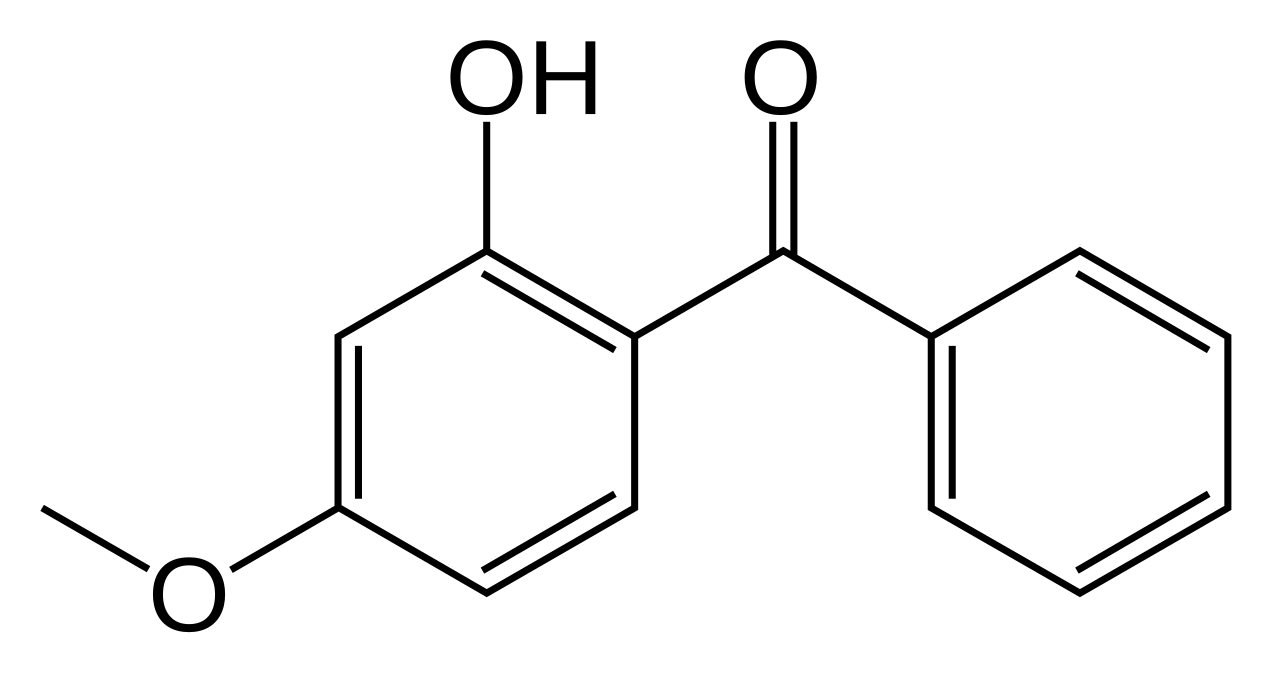
Oxybenzone (benzophenone-3) structural formula.
Credit: Fvasconcellos / Wikimedia Commons

License: Public domain
Wikimedia-provided PNG rendering of the SVG; whitespace trimmed, no content edits
What it is
Oxybenzone is an organic compound in the benzophenone family. Its CAS number is 131-57-7. It absorbs ultraviolet light. [1,6]
What it does and why it is used
In sunscreens it absorbs UV radiation before it reaches the skin, usually combined with other filters to cover a wider range of wavelengths. In other cosmetics, small amounts can stop light from breaking down colours and fragrances. [2,4]
Regulatory status and health context
Canada
Health Canada's primary sunscreen monograph lists oxybenzone as a permitted medicinal ingredient at up to 6%. Sunscreens in Canada are regulated as drugs or natural health products, so the ingredient and its strength must appear on the label. [4]
United States
In the United States sunscreens are over-the-counter drugs. FDA's 2021 proposed order found that only zinc oxide and titanium dioxide had enough data to be considered generally recognized as safe and effective. For oxybenzone and several other filters, it asked for more safety data, including on absorption. FDA continues to encourage sunscreen use alongside other sun-protection measures. [1]
European Union
Following the SCCS opinion, Commission Regulation (EU) 2022/1176 lowered the limits. Oxybenzone is allowed at up to 6% in face, hand and lip products and up to 2.2% in body products, including sprays. A limit of 0.5% applies in other cosmetic products, and to any amount used only to protect a product's formula. Products using it as a UV filter must state "Contains Benzophenone-3". [2,3]
Environmental notes
Oxybenzone washes off swimmers and enters wastewater. The National Academies' 2022 review looked at what is known about its fate and effects in aquatic environments, particularly for corals. It also stressed weighing those effects against the human health impacts of any change in sunscreen use. [5]
Quick facts
- CAS: 131-57-7. [6]
- Other names: benzophenone-3, BP-3. [6]
- Purpose: UV filter in sunscreens; light protection for some cosmetic formulas. [1,2]
- Canada: permitted sunscreen ingredient at up to 6%. [4]
- EU: up to 6% in face, hand and lip products, up to 2.2% in body products. [2]
- US status: more safety data requested by FDA. [1]
Sources
All URLs were fetched on 2026-11-10. Source publication dates differ from this draft's review date.
- FDA: Questions and answers: FDA's regulatory actions on over-the-counter sunscreen.
- EUR-Lex: Commission Regulation (EU) 2022/1176 on benzophenone-3 and other cosmetic ingredients.
- European Commission, SCCS: Opinion on benzophenone-3.
- Health Canada: Primary sunscreens monograph.
- National Academies: Review of fate, exposure, and effects of sunscreens in aquatic environments and implications for sunscreen usage and human health (2022).
- PubChem PUG REST: oxybenzone synonyms.