
Sulfites: the preservative in dried fruit that most people tolerate and some people with asthma cannot
CAS 7446-09-5.Also known as sulphites, sulfiting agents, sulfur dioxide, sodium metabisulfite, potassium metabisulfite, sodium bisulfite, and E220–E228.
Editorial draft Last reviewed 11 November 2026 About 914 words
CC INDEX
How it works39/100 Mild
Sulfites are safe for most people, but a well-documented minority, mostly people with asthma, can react with wheezing and, very rarely, anaphylaxis. Canada, the US and the EU require them to be named on labels at 10 ppm or more, which is the main protection, so the score stays in the mild band.
An editorial summary of this article’s cited evidence. It isn’t medical advice or a personal risk estimate.
Age index
What is the age index?Which age groups are more affected by this chemical’s possible health issues, based on this article’s sources.
- Pregnancy Unborn babies Not well studied
- Infants 0 to 1 Not well studied
- Young children 1 to 5 Moderate
- Children 6 to 12 Moderate
- Teens 13 to 19 Moderate
- Adults 20 to 64 Moderate
- Older adults 65 and over Moderate
- Risk depends on asthma and sulfite sensitivity rather than age; people with asthma are most at risk.

Illustration of dried fruits. Dried apricots, raisins and mango are among the foods that often contain added sulfites.
Credit: Chemical Century; AI-generated illustration
License: CC0 1.0
Illustration, not a photograph of a specific product. Resized and cropped for the web.
Dried apricots in a trail mix, a glass of wine with dinner, bottled lemon juice in the fridge: sulfites help keep these foods fresh and colourful, and most people never notice them. For a smaller group, mostly people with asthma, they can bring on wheezing, chest tightness and coughing, and in very rare cases a severe allergic reaction. That can turn an ordinary snack or meal out into a stressful experience. Clear labelling is the main protection, so people who react learn to check ingredient lists and ask about food when eating out.
Everyday exposure: where you meet it and how much
Sulfites occur naturally in some foods and in the human body, and they are also regulated food additives used to keep food colour, extend shelf life and stop micro-organisms growing. [1] Health Canada lists dried fruits and vegetables such as apricots, coconut, raisins, mango and sweet potato among the foods that often contain sulfites, along with wine, beer and cider, bottled lemon and lime juice, canned and frozen fruits and vegetables, jams, fruit fillings, and some cereals, crackers and muesli. [1] Baked goods and granola bars made with dried fruit, and deli meats, hot dogs and sausages, are other possible sources. [1]
Known and suspected harms
Evidence labels are editorial summaries, not individual risk predictions: established means recognized under the stated conditions; probable means a likely contribution with uncertainty; possible means limited evidence; disputed means assessors disagree. These labels do not describe how common an effect is.
- Established — allergy-like reactions in sulfite-sensitive people, especially with asthma: sulfites do not cause true allergic reactions, but sulfite-sensitive people can react with allergy-like symptoms, and people with asthma are most at risk. [1] The most common reactions, including wheezing, chest tightness and coughing, are estimated to affect about 5 to 10% of people with asthma and are more likely when asthma is poorly controlled. Reactions can also happen in people with no history of asthma. [1] Other symptoms include flushing, fast heartbeat, hives, dizziness, stomach upset and diarrhoea, tingling or difficulty swallowing. [1]
- Established — rare anaphylaxis: anaphylaxis from eating sulfites has been described but is very rare. [1] There is no allergy test for sulfites. [1]
- Established — safe for most consumers: Health Canada says sulfites are safe to eat for the majority of consumers. [1]
Reducing avoidable exposure and harm
People with sulfite sensitivity are advised to read labels every time they shop, to avoid products that list sulfites or carry a "may contain" sulfites statement, and to avoid products with no ingredient list. [1] Labels may use the names sulfites, sulphites, sulfiting agents or sulphiting agents, or the specific additive names. [1,2] If you have been prescribed epinephrine for severe reactions, follow your allergist's advice. [1]
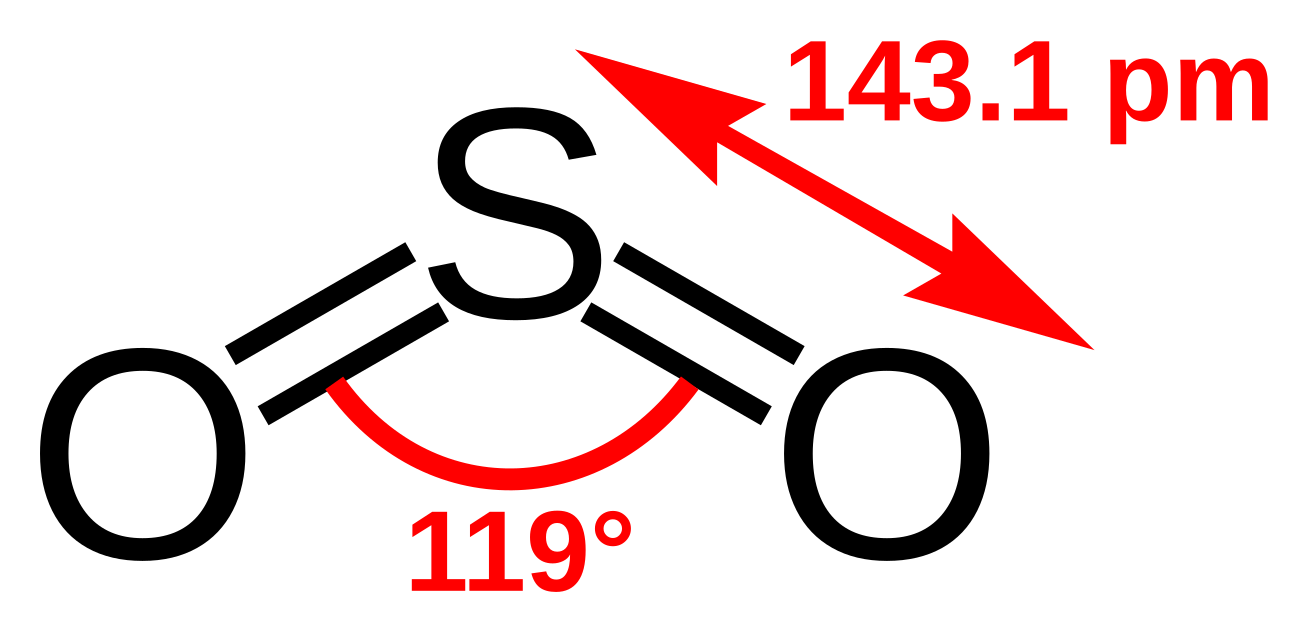
Structure of sulfur dioxide, the parent compound of sulfite food additives.
Credit: Richtom80 (English Wikipedia) / Wikimedia Commons

License: Public domain
Rendered from SVG to PNG, whitespace trimmed and placed on white
What it is
"Sulfites" is a group name. The sulfites that can be added to food in Canada are potassium bisulphite, potassium metabisulphite, sodium bisulphite, sodium dithionite, sodium metabisulphite, sodium sulphite, sulphur dioxide and sulphurous acid. [1] In Europe they carry the additive numbers E 220 to E 228. [1] Sulfur dioxide has CAS number 7446-09-5. [6]
What it does and why it is used
Sulfites preserve colour, extend shelf life and prevent the growth of micro-organisms. They are also used to bleach food starches and in making some packaging materials such as cellophane. [1]
Regulatory status and health context
Canada
Health Canada groups sulfites with the priority food allergens. [1] Under the Food and Drug Regulations, added sulfites present in a prepackaged product at a total of 10 parts per million or more must be declared, either in the list of ingredients or in a "contains" statement. [2]
United States
FDA rules say a sulfiting agent left in a finished food at a detectable amount, defined as 10 ppm or more, cannot be treated as an insignificant incidental additive, so it has to be declared on the label. [3] Sulfur dioxide is generally recognized as safe, except that it may not be used in meats, in foods recognized as a source of vitamin B1, or on fruits or vegetables intended to be served or sold raw or presented as fresh. [4]
European Union
Regulation (EU) No 1169/2011 lists sulphur dioxide and sulphites at concentrations of more than 10 mg/kg or 10 mg/litre, measured as total SO2, in its annex of substances or products causing allergies or intolerances, which must be indicated on food labels. [5]
Environmental notes
The sources used here do not assess sulfite food additives as an environmental concern. [1–5]
Quick facts
- Often in: dried fruits such as apricots, raisins and mango; wine. [1]
- Labelling threshold: 10 ppm (10 mg/kg) in Canada, the US and the EU. [2,3,5]
- Most at risk: people with asthma; about 5 to 10% of them react. [1]
- US rule: not allowed on fruits or vegetables sold or served raw as fresh. [4]
- Simple habit: if you are sensitive, read the label every time. [1]
Sources
All URLs were fetched on 2026-11-11. Source publication dates differ from this draft's review date.
- Health Canada: Sulphites, priority allergens.
- Justice Laws Website: Food and Drug Regulations, section B.01.010.2 (sulphites).
- eCFR: 21 CFR 101.100, food labeling exemptions (sulfiting agents).
- eCFR: 21 CFR 182.3862, sulfur dioxide.
- EUR-Lex: Regulation (EU) No 1169/2011 on food information to consumers, Annex II.
- PubChem PUG REST: sulfur dioxide synonyms.