
Makeup and colourSkin and personal care
Talc: a soft mineral used in powders and makeup, with concerns about inhalation, genital use and asbestos
CAS 14807-96-6.Also known as talcum, talcum powder, hydrated magnesium silicate, hydrous magnesium silicate, and steatite talc.
Editorial draft Last reviewed 10 November 2026 About 856 words
CC INDEX
How it works48/100 Moderate
Most uses of talc are not a health concern according to Canada's 2021 assessment. The score reflects specific risks from inhaling loose powders and from genital use, which IARC now classes as probably carcinogenic, and the long-standing problem of asbestos contamination. Canada has proposed measures and the US has started, then withdrawn, a testing rule, so regulation is still evolving.
An editorial summary of this article’s cited evidence. It isn’t medical advice or a personal risk estimate.
Age index
What is the age index?Which age groups are more affected by this chemical’s possible health issues, based on this article’s sources.
- Pregnancy Unborn babies Not well studied
- Infants 0 to 1 Higher concern
- Young children 1 to 5 Higher concern
- Children 6 to 12 Not well studied
- Teens 13 to 19 Not well studied
- Adults 20 to 64 Moderate
- Older adults 65 and over Not well studied
- Infants (higher concern): Keep loose powder away from babies' faces
- Young children (higher concern): Required warning on powders for under-3s
- Adults (moderate): Genital powder use and ovarian cancer

Illustration of talc rock and powder. Loose powders are the form most likely to be breathed in.
Credit: Chemical Century; AI-generated illustration
License: CC0 1.0
Illustration, not a photograph of a specific product. Resized and cropped for the web.
Many people remember a baby powder from childhood, and talc is still found in loose powders, blush and other makeup. For most uses it is not a health concern, but breathing in loose powder can harm the lungs, so loose powders are the form to be most careful with. Using talc powder in the genital area has been linked to ovarian cancer, and an international agency now considers talc probably carcinogenic. A separate, long-standing worry is asbestos, which can contaminate talc mined from the ground and is a known cause of cancer when inhaled.
Everyday exposure: where you meet it and how much
Talc is a mined mineral used in many cosmetic and personal care products, from baby powder to blush. [3] It also turns up in paper, plastics, paint, ceramics, putties and food, and in some natural health products and non-prescription drugs. [2] IARC notes that the general population may be exposed through talc-based consumer products such as body powders, by swallowing, breathing and skin contact, including in the genital area. [1]
Most of these uses are not a concern. Canada's 2021 assessment found risks only for a limited number of product types: loose powders that can be breathed in, and products used in the female genital area. [2]
Known and suspected harms
Evidence labels are editorial summaries, not individual risk predictions: established means recognized under the stated conditions; probable means a likely contribution with uncertainty; possible means limited evidence; disputed means assessors disagree. These labels do not describe how common an effect is.
- Established — lung harm from breathing loose talc powder: the Government of Canada concluded that talc may be harmful to the lungs when people breathe in certain loose talc powder products. [2]
- Probable — ovarian cancer linked to genital use of talc powder: in 2024 IARC classified talc as probably carcinogenic to humans (Group 2A), based on limited evidence in humans for ovarian cancer, sufficient evidence in experimental animals and strong mechanistic evidence. Canada concluded that talc may cause ovarian cancer when certain self-care products containing it are used in the female genital area. [1,2] FDA says studies since the 1960s have suggested an association but have not conclusively shown a link, and more research is needed. [3]
- Established — cancer from asbestos when talc is contaminated: talc and asbestos can form close together in the earth. Asbestos is a known carcinogen when inhaled, and "talc containing asbestos" remains in IARC's Group 1, carcinogenic to humans. [1,3] In 2019, FDA warned consumers to stop using certain cosmetic products that tested positive for asbestos. [3]
Reducing avoidable exposure and harm
Check ingredient lists; in Canada, cosmetics, natural health products and non-prescription drugs must list their ingredients. [2] Avoid loose talc powders that can be breathed in, especially around babies' faces, and avoid using talc-containing products in the female genital area. [2,4] Canada's assessment did not identify risks from talc in paper, plastics, paint, ceramics, putties or food, or in many cosmetics, natural health products and non-prescription drugs. [2]
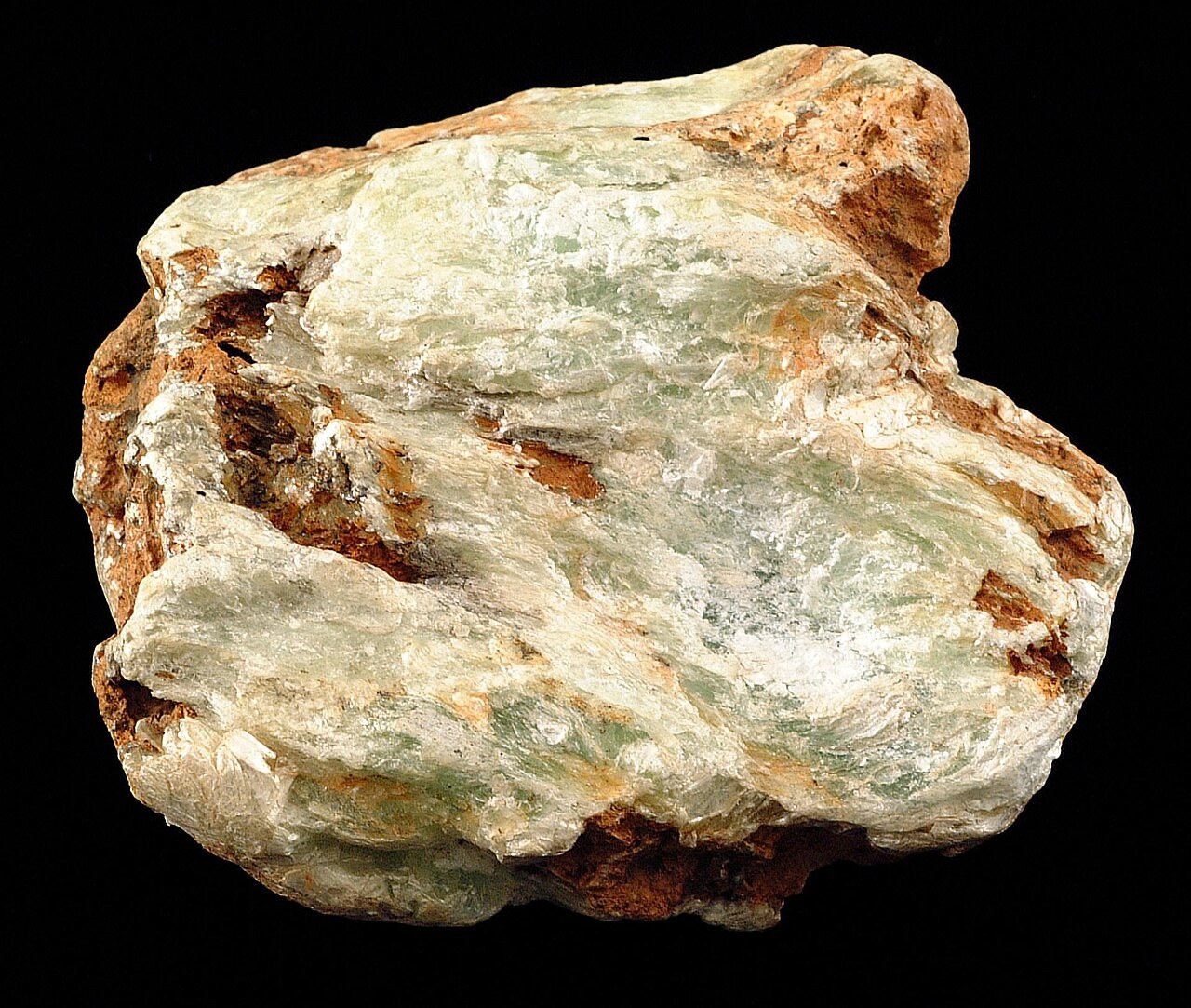
A specimen of the mineral talc.
Credit: Shannon Heinle / Wikimedia Commons

License: CC0 1.0
Wikimedia-provided thumbnail; scaled from original, no content edits
What it is
Talc is a naturally occurring mineral made of magnesium, silicon, oxygen and hydrogen. Chemically it is a hydrous magnesium silicate, Mg3Si4O10(OH)2. Its CAS number is 14807-96-6. [3,5]
What it does and why it is used
In cosmetics and personal care products, talc absorbs moisture, prevents caking, makes facial makeup opaque and improves how a product feels. [3]
Regulatory status and health context
Canada
After the 2021 final screening assessment, the Government of Canada proposed measures to manage the risks of talc in a limited number of product types, such as certain cosmetics, natural health products and non-prescription drugs. Canada concluded that talc is not harmful to the environment. [2]
United States
FDA tests talc-containing cosmetics for asbestos and has published results from surveys in several years. In December 2024 it proposed a rule requiring standard testing methods for asbestos in talc-containing cosmetics, as the Modernization of Cosmetics Regulation Act of 2022 requires. On November 28, 2025, FDA withdrew that proposal to consider comments further before issuing final rules. [3]
European Union
Annex III of the EU Cosmetic Products Regulation lists talc (entry 59). Powder products intended for children under 3 years must carry the warning "Keep powder away from children's nose and mouth". [4]
Environmental notes
Canada's assessment concluded that talc is not harmful to the environment. [2]
Quick facts
- CAS: 14807-96-6. [5]
- IARC (2024): probably carcinogenic to humans, Group 2A; talc containing asbestos is Group 1. [1]
- Main risks: breathing loose powder; use in the female genital area; asbestos contamination. [1–3]
- Most uses: not a health concern in Canada's assessment. [2]
- EU warning on baby powders: keep powder away from children's nose and mouth. [4]
Sources
All URLs were fetched on 2026-11-10. Source publication dates differ from this draft's review date.