
Food and drink Makeup and colour Household materials
Titanium dioxide: one pigment, different safety decisions
CAS 13463-67-7. Also known as TiO2, E171, CI 77891, and titania.
Editorial draft Last reviewed 8 November 2026 About 914 words
Everyday exposure: where you meet it and how much
Titanium dioxide can be encountered in coloured foods where permitted, cosmetics, paints, packaging and medicines. Eating an additive, applying a formulation to skin and breathing loose powder are different exposure scenarios. The sources used here chiefly assess food-grade material eaten in the diet, not every particle form or route. Individual intake cannot be calculated reliably from an ingredient list without concentration and consumption data. The US food-use limit of 1% by weight is a regulatory ceiling under applicable conditions, not an estimate of usual intake. [1–4]
Known and suspected harms
Evidence labels are editorial summaries: established means a recognized effect under specified conditions; probable means a likely contribution with uncertainty; possible means suggestive or limited evidence; disputed means relevant assessors disagree. Regulatory action is reported separately from proof of human harm.
- Possible — genotoxicity from ingested particles: EFSA could not exclude DNA-damage concerns and could not establish a safe daily intake for E171. It noted that absorption is low but particles can accumulate. That does not establish that a particular food causes cancer in people. [3]
- Disputed — how experimental findings translate to food-grade dietary exposure: Health Canada concluded there was no conclusive evidence of a human-health concern from the food additive; the FDA likewise did not identify genotoxicity concerns in the available relevant evidence. Both discuss differences in tested materials or exposure routes. The disagreement is real, not grounds to present either certainty of harm or certainty of no harm. [1,2]
- Unresolved — susceptible groups and non-food routes: these sources do not establish a quantitative extra food-use risk for a named group or a safe exposure level for inhaling loose powder. We do not invent one or transfer dietary findings to inhalation or skin use. Additional route-specific research is needed before making those claims.
Regulatory action, not a human-effect evidence grade: the EU withdrew authorisation of E171 in foods in 2022 after EFSA's assessment. This is often called the EU food ban; it is not a ban on every titanium dioxide use. The scientific concern motivating it is labelled possible above, rather than upgraded to established cancer causation. [3,4]
Reducing exposure proportionately
To reduce optional dietary exposure, compare ingredient lists and choose products without titanium dioxide where identified; visual appearance alone cannot confirm its presence or absence. The FDA notes that US labels need not always name the pigment specifically. Do not stop a medicine or abandon sun protection based on a food-additive decision: seek product-specific professional advice. Those are precautionary choices, not proven cancer-prevention interventions. [2–4]
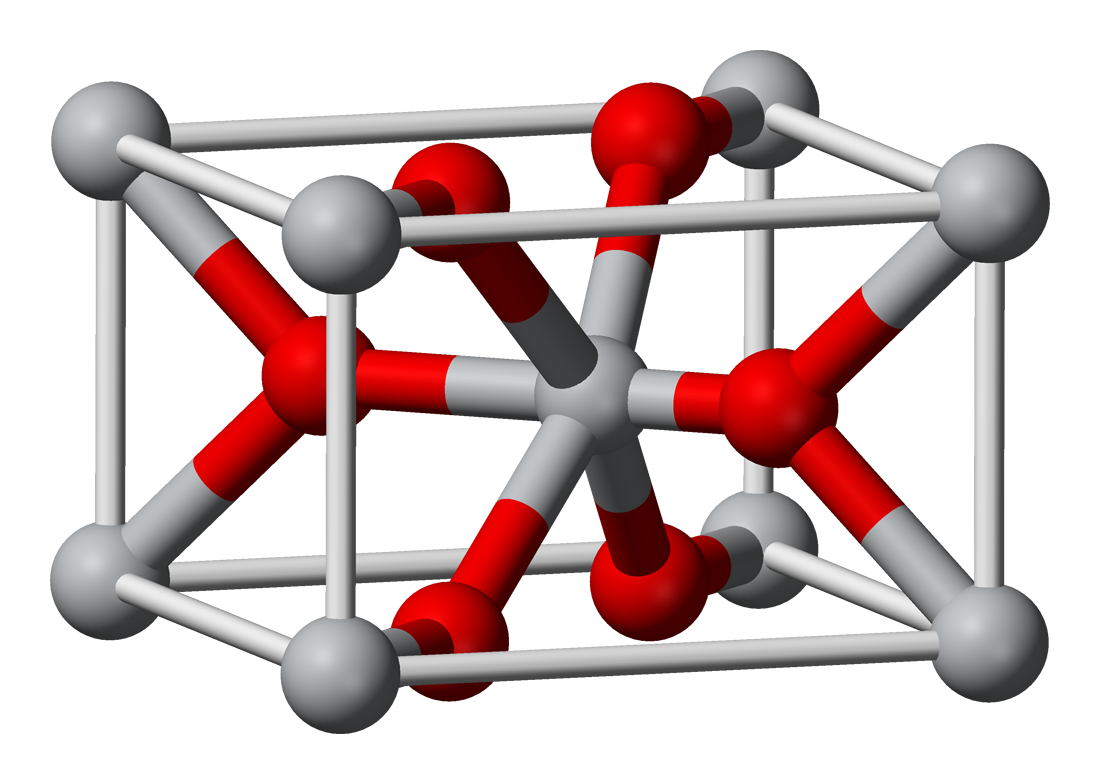
Rutile crystal unit cell: a solid-state structure view, not a discrete TiO2 molecule.
Credit: Ben Mills / Wikimedia Commons

License: Public domain
Wikimedia-provided thumbnail; scaled from original, no content edits
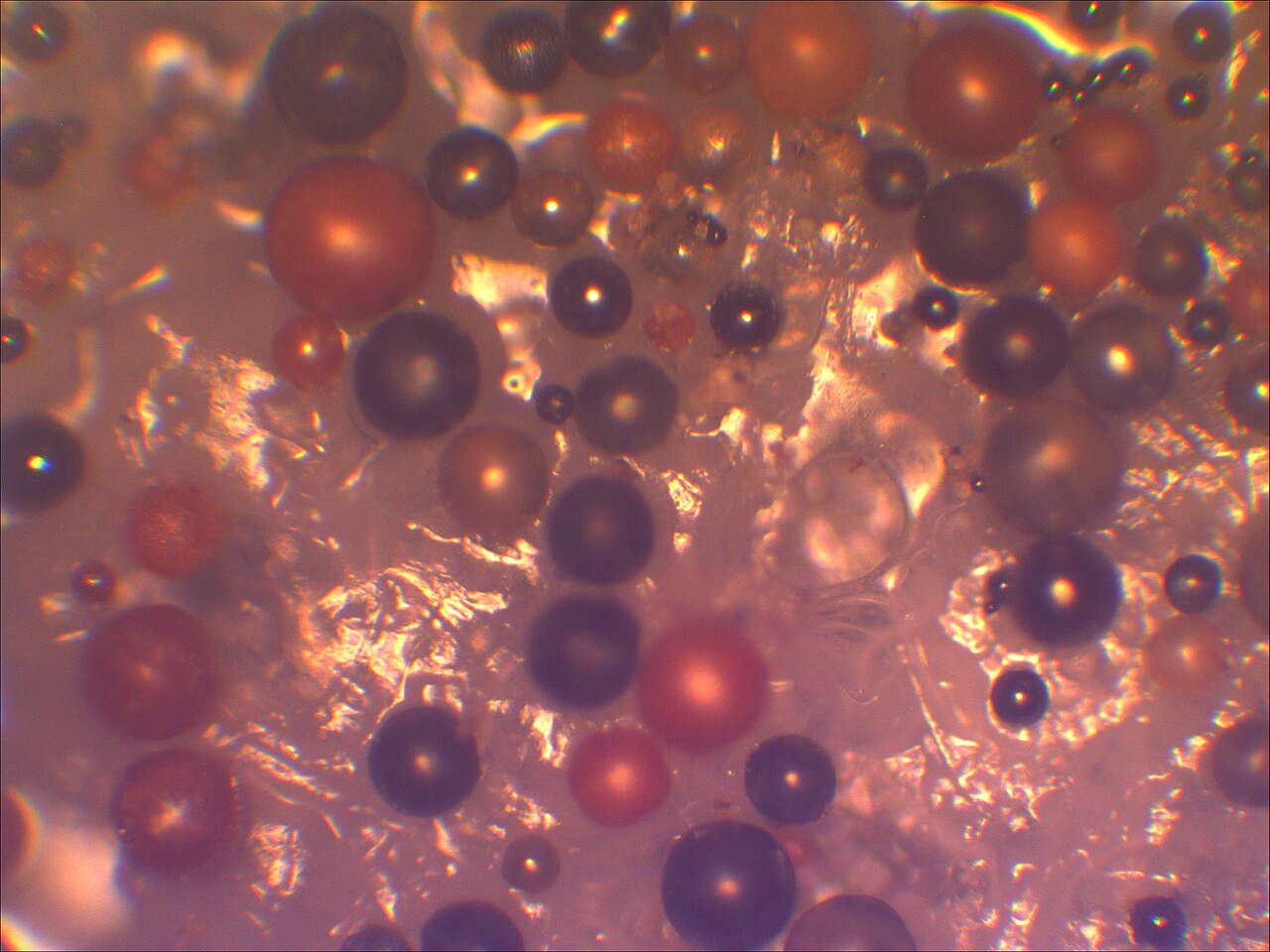
Titanium dioxide powder under magnification; not a finished food or cosmetic product.
Credit: ATGabdrahmanov / Wikimedia Commons

License: CC BY-SA 4.0
Wikimedia-provided thumbnail; scaled from original, no content edits
What it is
Titanium dioxide is a white pigment with formula TiO2 and CAS number 13463-67-7. Names include titania and, for European food use, E171. Crystal form, particle size, grade and formulation matter when interpreting evidence. The crystal illustration above is not a discrete molecular structure or a photograph of a finished food. [1–3,5]
What it does and why it is used
The pigment whitens or colours products. FDA examples include bakery products and candy; it also authorises specified uses as a colourant in food-contact polymers. Permission in a food-contact material is a different regulatory application from directly adding a colour to food. Appearance alone does not reveal the concentration or particle characteristics. [2]
Regulatory status and health context
Canada
Health Canada's food review found no conclusive evidence that food-grade titanium dioxide is a human-health concern. It gave particular weight to dietary studies and differences between food-grade material and some experimental preparations. It continues to monitor emerging science. This assessment should not be generalized to all doses, particle preparations or inhalation exposures. [1]
United States
The FDA permits food use under specified conditions, including a 1% weight limit, and its explanation describes review of a petition filed in April 2023 seeking withdrawal. A petition is not a completed ban. FDA did not identify genotoxicity concerns in the available relevant evidence and questions whether some European-reviewed test materials and administration routes represent dietary use. [2]
European Union
EFSA's 2021 assessment could not rule out genotoxicity and could not establish a safe daily intake. The Commission subsequently withdrew food-use authorisation through Regulation (EU) 2022/63, with transition provisions ending new placement of the affected foods by August 2022. EFSA supplied the scientific advice; the Commission made the legal decision. [3,4]
What the disagreement does and does not show
The editorial labels above remain possible for the genotoxicity concern and disputed for its translation to food-grade dietary risk. Neither regulatory permission nor withdrawal measures the cancer risk from a particular serving. The Commission separately discusses medicines; a food decision should not be treated as an instruction to stop treatment or as an assessment of every cosmetic. [1–4]
Environmental notes
The cited assessments do not establish a comparative life-cycle footprint or a blanket environmental safety rating. Environmental effects of particular forms require separate evidence; no ranking is assigned here.
Quick facts
- CAS/formula: 13463-67-7; TiO2. [2,5]
- Identifiers: E171, CI 77891, titania. [3,5]
- Purpose: whitening and colouring. [1–3]
- Regulatory contrast: Canada/US permit food uses under conditions; EU food authorisation was withdrawn in 2022. [1–4]
- Central concern: possible genotoxicity, with disputed relevance of parts of the experimental evidence to dietary exposure. [1–3]
Sources
All URLs were fetched on 2026-11-08.